

Customs Today
  • Home
  • Islamabad
  • Karachi
  • Lahore
  • National
  • Transfers and Postings
  • Chambers & Associations
  • Business
No Result
View All Result
Customs Today
  • Home
  • Islamabad
  • Karachi
  • Lahore
  • National
  • Transfers and Postings
  • Chambers & Associations
  • Business
No Result
View All Result
Customs Today
No Result
View All Result
Home Science & Technology Science

NASA tests TGALS glider based satellite launch system

byCustoms Today Report
16/06/2015
in Science, Science & Technology
Share on FacebookShare on Twitter

You might also like

Tesla driverless system to use updated radar technology

12/09/2016

Apple to develop its own self-driving technology

10/09/2016

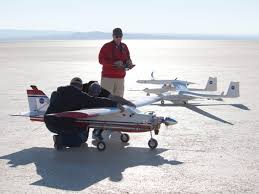
PARIS: NASA has announced that it has successfully tested a prototype of a glider that could help rockets launch from unmanned aircraft.
This could significantly reduce the costs associated with launching rockets and could help make sending small satellites into space far more efficient. The system is called the Towed Glider Air-Launch System, or TGALS, and is designed specifically with satellites in mind.
“The TGALS demonstration’s goal is to provide proof-of-concept of a towed, airborne launch platform,” said NASA in a report. “Distinct advantages are believed possible in cost, logistic efficiency, and performance when utilizing a towed, high lift-to-drag launch platform as opposed to utilizing a traditional powered ‘mothership’ launch platform. The project goal is to examine the performance advantage, as well as the operational aspects, of a towed, airborne launch system.”
Eventually, NASA hopes to use the TGALS to replace the first stage booster rocket with a more conventional aircraft, like a glider. TGALS is towed into the air by this aircraft and then released at 40,000 feet, meaning that it can operate from even small airports and is flexible when it comes to payload size.
Once the glider is released, a solid or hybrid rocket booster is fired, giving it acceleration into a steep climb. Because of the fact that it’s unmanned, it can climb even steeper as there is no pilot to consider.
Once the glider reaches the appropriate altitude, it drops the satellite, which fires its own rocket and is pushed into orbit. The glider, in the meantime, returns to the base it came from.

Related Stories

Tesla driverless system to use updated radar technology

byCT Report
12/09/2016

WASHINGTON: Electric carmaker Tesla announced Sunday it was upgrading its Autopilot software to use more advanced radar technology. In a...

Apple to develop its own self-driving technology

byCT Report
10/09/2016

SAN FRANCISCO: Apple may not become an automaker, but it still wants to develop its own self-driving technology. The iPhone-maker's...

NASA spots slowest known magnetar

byCT Report
10/09/2016

WASHINGTON: Astronomers have found evidence of a magnetar - magnetised neutron star - that spins much slower than the slowest...

‘YouTubers’ outshining old-school television

byCT Report
09/08/2016

SAN FRANCISCO: A media revolution is taking place, and most people over 35 years of age aren’t tuned in. Millennial...

Next Post

A protein can encourage stem cells to start becoming bone

  • Terms and Conditions
  • Disclaimer

© 2011 Customs Today -World's first newspaper on customs. Customs Today.

No Result
View All Result
  • Transfers and Postings
  • Latest News
  • Karachi
  • Islamabad
  • Lahore
  • National
  • Chambers & Associations
  • Business
  • About Us

© 2011 Customs Today -World's first newspaper on customs. Customs Today.