You might also like


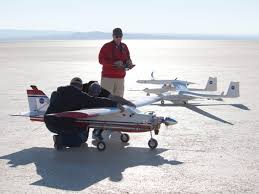
PARIS: NASA has announced that it has successfully tested a prototype of a glider that could help rockets launch from unmanned aircraft.
This could significantly reduce the costs associated with launching rockets and could help make sending small satellites into space far more efficient. The system is called the Towed Glider Air-Launch System, or TGALS, and is designed specifically with satellites in mind.
“The TGALS demonstration’s goal is to provide proof-of-concept of a towed, airborne launch platform,” said NASA in a report. “Distinct advantages are believed possible in cost, logistic efficiency, and performance when utilizing a towed, high lift-to-drag launch platform as opposed to utilizing a traditional powered ‘mothership’ launch platform. The project goal is to examine the performance advantage, as well as the operational aspects, of a towed, airborne launch system.”
Eventually, NASA hopes to use the TGALS to replace the first stage booster rocket with a more conventional aircraft, like a glider. TGALS is towed into the air by this aircraft and then released at 40,000 feet, meaning that it can operate from even small airports and is flexible when it comes to payload size.
Once the glider is released, a solid or hybrid rocket booster is fired, giving it acceleration into a steep climb. Because of the fact that it’s unmanned, it can climb even steeper as there is no pilot to consider.
Once the glider reaches the appropriate altitude, it drops the satellite, which fires its own rocket and is pushed into orbit. The glider, in the meantime, returns to the base it came from.