Customs Today
  • Home
  • Islamabad
  • Karachi
  • Lahore
  • National
  • Transfers and Postings
  • Chambers & Associations
  • Business
No Result
View All Result
Customs Today
  • Home
  • Islamabad
  • Karachi
  • Lahore
  • National
  • Transfers and Postings
  • Chambers & Associations
  • Business
No Result
View All Result
Customs Today
No Result
View All Result
Home Science & Technology Science

NASA’s Cassini spacecraft discovered largest moon of Saturn

byCustoms Today Report
13/11/2015
in Science, Science & Technology
Share on FacebookShare on Twitter

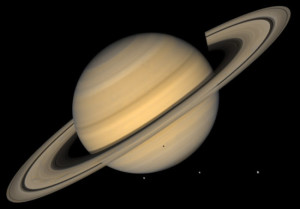
HONG KONG: NASA’s Cassini spacecraft has detected a monstrous new cloud of frozen compounds in the low-to mid-stratosphere of Titan, the largest moon of Saturn.

Cassini’s camera had already imaged an impressive cloud hovering over Titan’s south pole at an altitude of about 300 kilometres.


You might also like

Tesla driverless system to use updated radar technology

12/09/2016

Apple to develop its own self-driving technology

10/09/2016

However, that cloud, first seen in 2012, turned out to be just the tip of the iceberg. A much more massive ice cloud system has now been found lower in the stratosphere, peaking at an altitude of about 200 kilometres, NASA said.

The new cloud was detected by Cassini’s infrared instrument – the Composite Infrared Spectrometer, or CIRS – which obtains profiles of the atmosphere at invisible thermal wavelengths. The cloud has a low density, similar to Earth’s fog but likely flat on top.

For the past few years, Cassini has been catching glimpses of the transition from fall to winter at Titan’s south pole – the first time any spacecraft has seen the onset of a Titan winter.

Because each Titan season lasts about 7-1/2 years on Earth’s calendar, the south pole will still be enveloped in winter when the Cassini mission ends in 2017.

“When we looked at the infrared data, this ice cloud stood out like nothing we’ve ever seen before,” said Carrie Anderson of NASA’s Goddard Space Flight Center in Maryland.

“It practically smacked us in the face,” said Anderson.

The ice clouds at Titan’s pole don’t form in the same way as Earth’s familiar rain clouds.

Related Stories

Tesla driverless system to use updated radar technology

byCT Report
12/09/2016

WASHINGTON: Electric carmaker Tesla announced Sunday it was upgrading its Autopilot software to use more advanced radar technology. In a...

Apple to develop its own self-driving technology

byCT Report
10/09/2016

SAN FRANCISCO: Apple may not become an automaker, but it still wants to develop its own self-driving technology. The iPhone-maker's...

NASA spots slowest known magnetar

byCT Report
10/09/2016

WASHINGTON: Astronomers have found evidence of a magnetar - magnetised neutron star - that spins much slower than the slowest...

‘YouTubers’ outshining old-school television

byCT Report
09/08/2016

SAN FRANCISCO: A media revolution is taking place, and most people over 35 years of age aren’t tuned in. Millennial...

Next Post

Tmall Singles' Day sales rise 60%

  • Terms and Conditions
  • Disclaimer

© 2011 Customs Today -World's first newspaper on customs. Customs Today.

No Result
View All Result
  • Transfers and Postings
  • Latest News
  • Karachi
  • Islamabad
  • Lahore
  • National
  • Chambers & Associations
  • Business
  • About Us

© 2011 Customs Today -World's first newspaper on customs. Customs Today.