
Customs Today
  • Home
  • Islamabad
  • Karachi
  • Lahore
  • National
  • Transfers and Postings
  • Chambers & Associations
  • Business
No Result
View All Result
Customs Today
  • Home
  • Islamabad
  • Karachi
  • Lahore
  • National
  • Transfers and Postings
  • Chambers & Associations
  • Business
No Result
View All Result
Customs Today
No Result
View All Result
Home Science & Technology Science

NASA’s Cassini spacecraft will fly past Saturn

byCustoms Today Report
28/10/2015
in Science, Science & Technology
Share on FacebookShare on Twitter

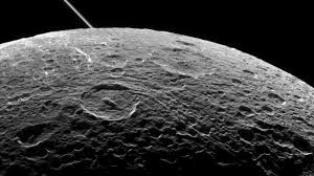
LONDON: A spacecraft will this week be sent plunging deep through a fountain of icy spray erupting from an extraterrestrial ocean that could harbour life.

The historic fly-by will mark the most exciting attempt yet to unlock the hidden secrets of Saturn’s water-world moon Enceladus.


You might also like

Tesla driverless system to use updated radar technology

12/09/2016

Apple to develop its own self-driving technology

10/09/2016

Scientists confirmed last month that the small satellite – which at 310 miles across is a seventh of the size of Earth’s moon – has a global ocean covered by an icy shell.

At 3.22 pm, UK time, on Wednesday, the Cassini probe will shoot through the plume above the moon’s south polar region at an altitude of 30 miles.

During the approach, instruments on board the craft will sample the spray and analyse the cocktail of chemicals within it.

Higher plume encounters have been made before but the low sweep will allow Cassini to access heavier molecules including organics.

Dr Curt Niebur, Cassini program scientist at the American space agency Nasa’s headquarters in Washington DC, said: ‘This incredible plunge through the Enceladus plume is an amazing opportunity for NASA and its international partners on the Cassini mission to ask, ‘can an icy ocean world host the ingredients for life?”

The plume is fed by icy geysers which blast 250 kilograms of water vapour, ice grains and volatile chemicals into space at 2188 kilometres per hour and are thought to have a fiery origin deep beneath the moon’s surface.

They have been compared with hydrothermal vents on Earth – volcanic fissures on the ocean floor where sea water percolating through fractures in the bedrock is heated to high temperatures.


Related Stories

Tesla driverless system to use updated radar technology

byCT Report
12/09/2016

WASHINGTON: Electric carmaker Tesla announced Sunday it was upgrading its Autopilot software to use more advanced radar technology. In a...

Apple to develop its own self-driving technology

byCT Report
10/09/2016

SAN FRANCISCO: Apple may not become an automaker, but it still wants to develop its own self-driving technology. The iPhone-maker's...

NASA spots slowest known magnetar

byCT Report
10/09/2016

WASHINGTON: Astronomers have found evidence of a magnetar - magnetised neutron star - that spins much slower than the slowest...

‘YouTubers’ outshining old-school television

byCT Report
09/08/2016

SAN FRANCISCO: A media revolution is taking place, and most people over 35 years of age aren’t tuned in. Millennial...

Next Post

Tufts University figured out how to give dog face back after severe accident

  • Terms and Conditions
  • Disclaimer

© 2011 Customs Today -World's first newspaper on customs. Customs Today.

No Result
View All Result
  • Transfers and Postings
  • Latest News
  • Karachi
  • Islamabad
  • Lahore
  • National
  • Chambers & Associations
  • Business
  • About Us

© 2011 Customs Today -World's first newspaper on customs. Customs Today.