Customs Today
  • Home
  • Islamabad
  • Karachi
  • Lahore
  • National
  • Transfers and Postings
  • Chambers & Associations
  • Business
No Result
View All Result
Customs Today
  • Home
  • Islamabad
  • Karachi
  • Lahore
  • National
  • Transfers and Postings
  • Chambers & Associations
  • Business
No Result
View All Result
Customs Today
No Result
View All Result
Home Science & Technology Science

NASA’s Dawn spacecraft hints bright spots on dwarf planet Ceres

byCT Report
11/12/2015
in Science, Science & Technology
Share on FacebookShare on Twitter

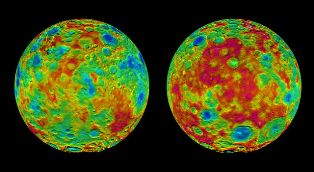
LONDON: The bright spots dotting the surface of dwarf planet Ceres have been one of the biggest mysteries of the solar system in 2015.However, scientists now appear to have a better idea what these mysterious spots are, thanks to data from NASA’s Dawn spacecraft that has been circling the dwarf planet since March.

Based on observations made by Dawn spacecraft, scientists reported that the bright spots found on Ceres are made up primarily of hydrated magnesium sulfates. Magnesium sulfate is popularly known as Epsom salt and is notably used here on Earth for treating a range of ailments such as joint inflammation and sore feet.


You might also like

Tesla driverless system to use updated radar technology

12/09/2016

Apple to develop its own self-driving technology

10/09/2016

Andreas Nathues and his colleagues at the Max Planck Institute for Solar System Research in Germany counted 130 bright spots on the surface of Ceres. Using Dawn’s Framing Camera, whose data provide information on the composition of Ceres based on reflectance characteristics, Nathues’ team identified the material as a kind of magnesium sulfate called hexahydrite.

The whitish patches have intrigued scientists since they were discovered. The spots are mostly linked to impact craters and are much brighter compared to the surface of Ceres as a whole. Ceres’ surface is about as reflective as a freshly poured asphalt while the brightness of the spots ranges from that of a concrete to the reflectivity of the ocean ice.

Experts have earlier posited that the bright spots are composed of either water ice of some type of salt, but data from Dawn’s framing camera appear to support the salt hypothesis.

The closest match for the center of the brightest spot in the Occator Crater, which has the most famous collection of the bright spots, supports the idea that it is composed of hexahydrite albeit the composition seems to shift into less-hydrated kinds of magnesium sulfate at greater distances from the center.


Related Stories

Tesla driverless system to use updated radar technology

byCT Report
12/09/2016

WASHINGTON: Electric carmaker Tesla announced Sunday it was upgrading its Autopilot software to use more advanced radar technology. In a...

Apple to develop its own self-driving technology

byCT Report
10/09/2016

SAN FRANCISCO: Apple may not become an automaker, but it still wants to develop its own self-driving technology. The iPhone-maker's...

NASA spots slowest known magnetar

byCT Report
10/09/2016

WASHINGTON: Astronomers have found evidence of a magnetar - magnetised neutron star - that spins much slower than the slowest...

‘YouTubers’ outshining old-school television

byCT Report
09/08/2016

SAN FRANCISCO: A media revolution is taking place, and most people over 35 years of age aren’t tuned in. Millennial...

Next Post

UK stocks fall at end, FTSE 100 tumbles 0.6%

  • Terms and Conditions
  • Disclaimer

© 2011 Customs Today -World's first newspaper on customs. Customs Today.

No Result
View All Result
  • Transfers and Postings
  • Latest News
  • Karachi
  • Islamabad
  • Lahore
  • National
  • Chambers & Associations
  • Business
  • About Us

© 2011 Customs Today -World's first newspaper on customs. Customs Today.