You might also like


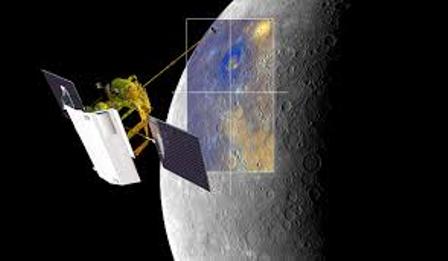
CANADA: After more than a decade in space and four years orbiting Mercury, Nasa’s Messenger mission is set to finally come to an explosive end.
The spacecraft is expected to crash into the planet’s surface at 20:46 BST on Thursday; its last fuel was burnt in a final manoeuvre on 24 April.
After reaching Mercury in 2011, Messenger has far exceeded its primary mission plan of one year in orbit.
It is only slowly losing altitude but will hit at 8,750mph (14,000km/h).
That means the 513kg craft, which is only 3m across, is expected to blast a 16m crater into an area near the planet’s north pole.
The high-speed collision, three times faster than sound, will obliterate the history-making craft. And it will only happen because Mercury has no thick atmosphere to burn up incoming objects; for this same reason the planet is struck by similarly-sized meteors once every month or two – and they arrive ten times faster.
During its twice-extended mission, Messenger (MErcury Surface, Space ENvironment, GEochemistry, and Ranging) transformed our understanding of Mercury. It sent back more than 270,000 images and 10 terabytes of scientific measurements.
It found evidence for water ice hiding in the planet’s shadowy polar craters, and discovered that Mercury’s magnetic field is bizarrely off-centre, shifted along the planet’s axis by 10% of its diameter.