

EUROPE: Even Neanderthals liked a little bling. A fresh examination of prehistoric eagle talons discovered more than 100 years ago reveals that our ancient relatives made and wore their own jewelry.
The study, published in the journal PLOS ONE, indicates that modern humans weren’t the only hominins who accessorized – and it further narrows the distinctions that some scientists think may have set the two species apart.
“Some have argued that Neandertals lacked symbolic ability or copied this behavior from modern humans,” the study authors wrote. “These remains clearly show that the Krapina Neandertals made jewelry well before the appearance of modern humans in Europe.”
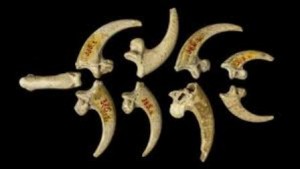
The eight white-tailed eagle talons were all found in the same archaeological layer and are an estimated 130,000 years old. The talons were found more than a century ago, during excavations of a Krapina Neanderthal site that lies in Croatia, but a Croatian and American team of researchers decided to subject the ancient find to fresh eyes.
The scientists found that the talons feature similar patterns of distinct markings – four of them have multiple cut marks with smoothed edges, all of them show some kind of abrasion or polishing, and three of the heavyweights have small notches in roughly the same spots.
“Presence of eight Krapina talons, four showing cut marks, suggests they were disarticulated by cutting the tendons, curated and lost as a unit, probably as a necklace or some other kind of jewelry,” the researchers wrote.
So from the looks of it, the scientists think that these features might have been mounted together in a single piece. There’s also a single phalanx (a toe bone) with similar cuts and abrasion, they wrote.
If you think those bones were easy to procure, think again. For one thing, compared to other birds in the environment, white-tailed eagles are relatively rare – and yet their bones account for the majority of the bird-life sample at the Krapina site. For another, they were pretty fierce.
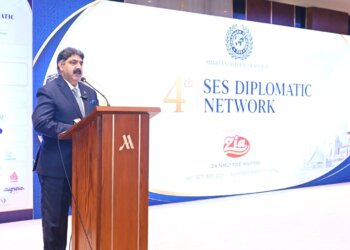
RCCI chief urges diplomats, business leaders to convert linkages into trade, investment
RAWALPINDI: President of the Rawalpindi Chamber of Commerce & Industry (RCCI), Nosherwan Khalil Khan called on diplomatic missions and international...