

Customs Today
  • Home
  • Islamabad
  • Karachi
  • Lahore
  • National
  • Transfers and Postings
  • Chambers & Associations
  • Business
No Result
View All Result
Customs Today
  • Home
  • Islamabad
  • Karachi
  • Lahore
  • National
  • Transfers and Postings
  • Chambers & Associations
  • Business
No Result
View All Result
Customs Today
No Result
View All Result
Home Science & Technology Science

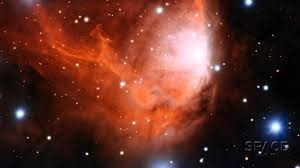
Nebula’s glowing ‘champagne flow’ snapped by Very Large Telescope

byCustoms Today Report
29/05/2015
in Science, Science & Technology
Share on FacebookShare on Twitter

You might also like

Tesla driverless system to use updated radar technology

12/09/2016

Apple to develop its own self-driving technology

10/09/2016

CANADA: A birthing nebula known as RCW 34 has been photographed like never before, revealing details in a stream of gas and dust astronomers are dubbing a “champagne flow.” The image was recorded by astronomers using the Very Large Telescope (VLT) in Chile, managed by the European Southern Observatory.
The RCW 34 nebula is a stellar birthplace, where new stars are forming from the gaseous material found throughout the cloud. As heated gas leaks out from the nebula into outer space, the young stars within the body create bubbles which race outward from the cloud, like champagne from a bottle. This action provided the inspiration for astronomers to dub the stream as a champagne flow.
Bright, hot young stars in the brightest part of the nebula dramatically heat gas and dust within the nebula, starting the process that leads to the champagne flow. Ultraviolet light from these stellar bodies ionizes the gas, stripping electrons off the atoms within the cloud. Ionized hydrogen gas like this is common within stellar nurseries.
“Hydrogen is treasured by cosmic photographers because it glows brightly in the characteristic red colour that distinguishes many nebulae and allows them to create beautiful images with bizarre shapes. It is also the raw material of dramatic phenomena such as champagne flow. But ionised hydrogen also has an important astronomical role: it is an indicator of star-forming regions,” The European Southern Observatory reported.

Related Stories

Tesla driverless system to use updated radar technology

byCT Report
12/09/2016

WASHINGTON: Electric carmaker Tesla announced Sunday it was upgrading its Autopilot software to use more advanced radar technology. In a...

Apple to develop its own self-driving technology

byCT Report
10/09/2016

SAN FRANCISCO: Apple may not become an automaker, but it still wants to develop its own self-driving technology. The iPhone-maker's...

NASA spots slowest known magnetar

byCT Report
10/09/2016

WASHINGTON: Astronomers have found evidence of a magnetar - magnetised neutron star - that spins much slower than the slowest...

‘YouTubers’ outshining old-school television

byCT Report
09/08/2016

SAN FRANCISCO: A media revolution is taking place, and most people over 35 years of age aren’t tuned in. Millennial...

Next Post

Indian rupee opens 63.93per dollar

  • Terms and Conditions
  • Disclaimer

© 2011 Customs Today -World's first newspaper on customs. Customs Today.

No Result
View All Result
  • Transfers and Postings
  • Latest News
  • Karachi
  • Islamabad
  • Lahore
  • National
  • Chambers & Associations
  • Business
  • About Us

© 2011 Customs Today -World's first newspaper on customs. Customs Today.