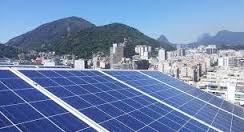
KATHMANDU: The country will be able to mobilise $20 million as grant to spur private sector investment in utility-scale solar power. The grant being financed by the Strategic Climate Fund — the multi-donor climate investment fund — administered by the Asian Development Bank (ADB) has offered the grant for the viability gap funding of the utility-scale (that can be connected to the national grid) solar power installed by the private sector.
As solar energy is considered to be more expensive than hydroelectric energy, this sector is less attractive for developers due to low rate quoted by Nepal Electricity Authority (NEA) — the single power off-taker of the country. The grant will be used to finance the difference between private sector cost of producing utility-scale solar power and the minimum price that NEA is willing to pay for the power.


The 10-year plan of the Ministry of Energy titled ‘Energy Crisis Prevention and Electricity Development Decade’ has allowed NEA to purchase per unit solar power at Rs 9.61 and developer has to bear all the cost, including transmission line and land, among others.
The Project Monitoring Directorate (PMD) under NEA will implement this project. Companies will be able to bid to develop solar plants through an international competitive bidding process, with power purchase agreements awarded on the basis of the best off-take prices. The funding under the grant will be payable on the first day of operation of the solar system, up to June-end, 2022. Bidding is expected to start in the first quarter of 2017 and last around six to 12 months. Under the grant amount of $20 million, the private sector will get viability gap funding until June-end of 2022 and they have to install solar power by 2018. “The funding should ensure installation of at least 25 megawatts (MW) of solar power by 2018,” according to ADB. The bank is preparing to replicate this model in other nations of energy-strapped South Asia.
“Providing some financial security to the private sector should draw more private investment into this critical sector in Nepal and, in doing so, reduce pressure on government finances,” said Aiming Zhou, senior energy specialist at ADB’s South Asia Regional Department. “And once the private sector better understands the Nepal solar sector, I would expect them to seek investment opportunities elsewhere in Nepal or indeed the region.” According to Kenichi Yokoyama, country director of Nepal Resident Mission of ADB, private sector players will be able to recover the majority of the investment within three to four years when the viability gap funding is made available under this grant assistance.
The country has been suffering chronic power shortages, with peak demand of 1,444MW far outpacing installed capacity of 885MW. Only 65 per cent of the country’s households has access to electricity. Hydropower has, so far, been a mainstay of the country’s clean energy supply but solar power is an ideal complement, particularly during the low-water season. Till date, the private sector investment has largely been in micro- and mini-grid solar power, with utility-scale plants of 4MW or more attracting little private sector attention.