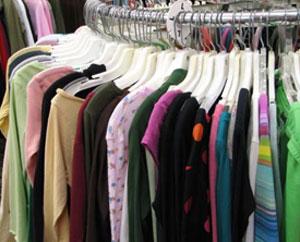
KATHMANDU: Nepal has once again received an opportunity to ramp up exports of readymade garments, pashmina and leather products, as the US Senate has endorsed a Bill that paves the way for duty-free quota-free (DFQF) entry of these goods into the world’s largest economy.
The latest Bill, which will now require the US President’s seal to transform it into an Act, is expected to give a new lease of life to the readymade garment industry, which is on the verge of collapse since the expiry of Multi Fibre Agreement (MFA) in January 2005.


Once the new Bill comes into force, Nepali products, such as readymade garments, pashmina and leather products, will get zero-tariff access into the US market. Currently, the US government is imposing 16.5 per cent tariff on import of cotton apparels. Nepal can enjoy duty free facility till December 9, 2025.
“It would be a golden opportunity for the revival of the garment industry, which was the country’s top exporter one-and-a-half decades back,” said Shankar Sharma, former ambassador to the United States. “We can expect more investment and employment in garment sector and factories that manufacture ancillary products.”
Sharma further added that the Bill introduced in the US House on February 2, 2015, received momentum after the devastating earthquakes of April and May that shattered the Nepali economy, which had just emerged from the decade-long conflict.
The Bill was introduced by California Senator Dianne Feinstein. There were over 400 apparel factories across the country that provided employment to 450,000 individuals when garment export was at its peak in 2001. And, reportedly, investment in this sector exceeded Rs six billion back then.
The downfall of the garment industry can be traced back to the time when MFA was phased out. Till that time, about 90 per cent of readymade garments produced in the country, amounting to about Rs 10 billion, were exported to the US. Readymade garments then had 20 per cent share in total export. Its ranking slipped to fifth position in overall exports of 2014-15, amounting to Rs 5.29 billion.
Nepali apparel entrepreneurs believe that the US market could help resurrect the garment industry. However, there are some challenges in reviving the sector. Along with the quota phase-out, over 85 per cent of garment factories had pulled down their shutters. According to Garment Association Nepal (GAN) — umbrella association of apparel entrepreneurs in Nepal — only 50 factories are in operation at present.
“The decline was not only due to quota phase-out, but also the deteriorating industrial environment in country with problems of power shortage, labour unrest, conflict and higher interest rate charged by banks and financial
institutions,” said Chandi Prasad Aryal, acting president of GAN.
To be able to fully capitalise on preferential treatment extended by the US, apparel entrepreneurs have sought export incentive of up to 10 per cent for five years, early approval of the Labour Bill from the parliament, subsidised interest rates from banks and financial institutions and abundant supply of power in factories.
To avail this facility, there must be at least 35 per cent value addition on products. Nepali entrepreneurs have said value addition on garments is 70 per cent. However, Nepali garments are seven to 10 per cent more expensive than those from other South Asian nations due to transport costs.
As per GAN, Nepal’s export to the US stood at 0.02 per cent of the latter’s total apparel import during the peak time. The limit set by the US customs law allows import of up to 1.5 per cent of the total apparel import under zero tariff facility, which means there is room for the country to expand its apparel market in the US.