
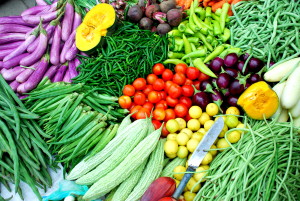
KATHMANDU: Nepal’s vegetable export potential largely remains untapped due to lack of harmonisation between Nepali and Indian food quality standards, a latest report says. Nepali off-season vegetables, such as bitter gourd, pointed gourd, sponge gourd and mustard leaf, are preferred by Indian consumers because of their superior quality, says a study report launched by the South Asia Watch on Trade, Economics and Environment (Sawtee).
These vegetables, according to the report, could also be sold at higher prices in the Indian market. “[But] lack of integrated laboratories for quality certification and absence of mutual recognition of accreditation between Nepal and India have left Nepali fresh produce export at the mercy of Indian customs offices,” Purushottam Ojha, former commerce secretary and senior Sawtee consultant, told a discussion organised by Sawtee on Friday. These non-tariff barriers imposed by India, according to Ojha, are discouraging trade through customs points, giving rise to informal trade. However, attention also needs to be given to lack of proper post-harvest handling of fresh produces which makes Nepali products expensive and uncompetitive in comparison to Indian products, said Pradip Maharjan, CEO of the Federation of Nepalese Chambers of Commerce and Industry’s Agro Enterprise Centre. “So, mechanisms need to be developed so that Nepali products could comply with the technical standards set by importers,” Sawtee Chairman Posh Raj Pandey said.


Besides India, Nepal can also explore possibilities of exporting fresh vegetables to Bangladesh and the Middle East. Although high tariff rate of 25 percent on vegetable imports imposed by Bangladesh and strict sanitary and technical standards introduced by the governments in the Middle East pose challenges, both the public and private sectors have not made serious efforts to promote their products in those destinations, says the report prepared on the basis of studies conducted at custom points in Bhairahawa, Birgunj, Biratnagar, Jhapa, Dhangadi, Mahendranagar and Nepalgunj. To address this problem, the study has stressed on the need to develop a concerted action plan to address problems related to exporting vegetables and establishing effective linkages with export markets. The study has also highlighted on the need to build the capacity of Nepali farmers and traders on post-harvest operations and other trainings to enable them to market their produce. “More investment must be made to enhance productive capacity of vegetable producers and improve infrastructure, such as storage facilities and collection centres, so that Nepal can ensure consistent supply of vegetables to the international market without relying on seasonal booms,” Commerce Secretary Naindra Prasad Upadhyay said.



