You might also like


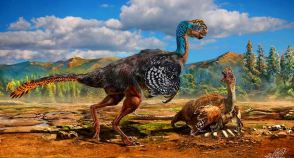
HONG KONG: A new dinosaur discovered in south China suggests oviraptorosaurs, a range of feathered creatures, were more widely spread across Asia than previously believed.
Huanansaurus ganzhouensis was unearthed at the construction site of a new railway station in Ganzhou, Jiangxi province.
Palaeontologists dug up a partial skeleton and nearly complete skull, dated to the Cretaceous period.
The research, published in journal Scientific Reports, doesn’t say exactly how large Huanansaurus was, but its closest relative Citipati was about the size of an emu, and photos of Huanansaurus claws appear to suggest it was of similar stature.
Citipati lived more than 3000km in modern-day Mongolia however.
“Due to the similarities between the two species, despite being separated by approximately 3000km, the authors suggest that similar habitats must have existed across Asia at the end of the Mesozoic era which allowed oviraptorids to flourish,” Scientific Reports said in a statement.
Like its oviraptorosaur relatives, Huanansaurus had a crest on top of its skull, but a different jaw structure – meaning it probably had different eating and foraging habits.