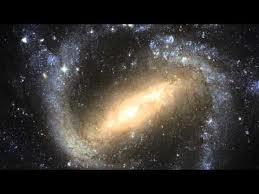


CANADA: Imagine seeing a million stars dazzling the night sky instead of a few thousand that we see from Earth. Such a fantastic sight could be visible if there was a planet near the heart of two galaxies discovered accidentally by two undergraduates at San Jose State University. These galaxies are the densest known till know.
The first galaxy discovered has a width two hundred times smaller than our own Milky Way Galaxy and a stellar density 10,000 times larger than that in the neighborhood of the Sun. For an observer in the core of this galaxy, the night sky would be lit up by a million stars.
The stellar density of the second system is higher still: about a million times that of the Solar neighborhood. Both systems belong to the new class of galaxies known as ultracompact dwarfs (UCDs).
The study, led by undergraduates Michael Sandoval and Richard Vo, used imaging data from a slew of telescopes and data from the Southern Astrophysical Research Telescope (SOAR), located on the Cerro Tololo Inter-American Observatory site.
“Ultracompact stellar systems like these are easy to find once you know what to look for. However, they were overlooked for decades because no one imagined such objects existed: they were hiding in plain sight”, said Richard Vo. “When we discovered one UCD serendipitously, we realized there must be others, and we set out to find them.”
The students worked on the project on their own time poring over a large amount of archived data. Aaron Romanowsky, the faculty mentor and coauthor on the study, explained, “The combination of these elements and the use of national facilities for follow up spectroscopy is a great way to engage undergraduates in frontline astronomical research, especially for teaching universities like San Jose State that lack large research budgets and their own astronomical facilities.”

Karachi Port sets 138-year cargo handling record
KARACHI: Pakistan's maritime sector has achieved a major milestone as Karachi Port set a new record in its 138-year history...