
LONDON: The noise and bustle of nearby neighborhoods fade away at New Haven’s sprawling port. An oil and chemical tanker floats placidly at a dock. A tug pushes a barge out in Long Island Sound. Only occasionally do trucks rumble up to a scrap metal business or deliver materials for road work.
What was a key port for lumber and other goods dating to Colonial times is, like other New England ports, facing a reckoning after a lengthy decline.
In the region that nurtured the beginnings of New World commerce with whaling, fishing and shipbuilding, state and local governments are taking stock of aging infrastructure at deep-water ports. As they move to stake out their share of global trade, the challenge is how to stay relevant in an age of ever-larger ships.
“There are so few people who know about our deep-water ports,” said Judith Scheiffele, executive director of the New Haven Port Authority. “I think it’s kind of taken for granted.”
New England’s ports saw their national rankings in terms of total trade plummet since the 1970s, a trend that only accelerated with the Great Recession. New Haven, which ranked 33rd in the nation in 1972 with 13.1 million tons, ranked 57th in 2013 with only 8.4 million tons, according to the American Association of Port Authorities.
The drop owes to issues of access and global forces far outside local control.
Ports constantly need costly dredging, and the will has not always kept up with the need to remove silt. In Bridgeport, Connecticut, New England’s southernmost port, ship traffic is severely limited because the harbor has not been dredged since 1964, leaving it short of the standard 35-foot depth in places.
A harbor’s depth is key to attracting business and has huge significance for marketing, said Tim Sullivan, deputy commissioner at the state’s Department of Economic and Community Development.
Money that once might have gone toward deepening harbors and providing rail and highway connections was used to increase security after the Sept. 11 attacks, according to John Martin, a maritime industry analyst.
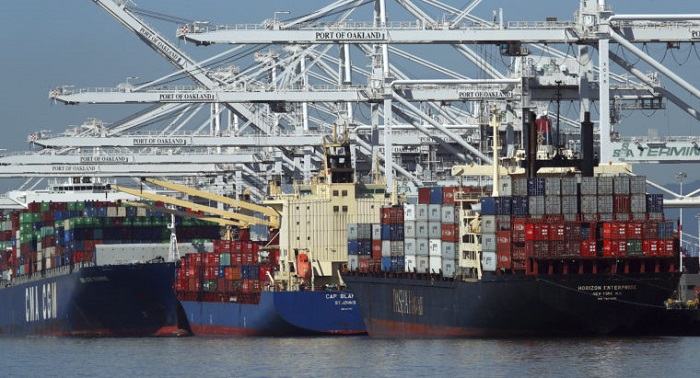
Shipping activity at Port Qasim on February 11
KARACHI: Three ships namely, Glen Canyon, Al-Salam- II and TSM Pollux carrying Containers, Gas oil and Palm oil were arranged...