

Customs Today
  • Home
  • Islamabad
  • Karachi
  • Lahore
  • National
  • Transfers and Postings
  • Chambers & Associations
  • Business
No Result
View All Result
Customs Today
  • Home
  • Islamabad
  • Karachi
  • Lahore
  • National
  • Transfers and Postings
  • Chambers & Associations
  • Business
No Result
View All Result
Customs Today
No Result
View All Result
Home Science & Technology Science

New findings on whale tongues may lead to insight on human nerve damage

byCustoms Today Report
06/05/2015
in Science, Science & Technology
Share on FacebookShare on Twitter

You might also like

Karachi Port sets 138-year cargo handling record

17/07/2026

Tesla driverless system to use updated radar technology

12/09/2016

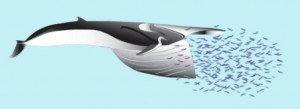
MEXICO: Scientists discovered rorqual whales have “stretchy” nerves in their moth and tongue that can double in length and spring back, similar to a bungee cord.
The discovery of these incredible nerves could provide insight into how whales are able to create a bubble between their body wall and blubber during deep-sea dives for prey, the University of British Colombia reported.
“This discovery was totally unexpected and unlike other nerve structures we’ve seen in vertebrates, which are of a more fixed length,” said Wayne Vogl of UBC’s Cellular and Physiological Sciences department. “The rorquals’ bulk feeding mechanism required major changes in anatomy of the tongue and mouth blubber to allow large deformation, and now we recognize that it also required major modifications in the nerves in these tissues so they could also withstand the deformation.”
If a human’s nerves were to be stretched in this way it would cause severe damage, but the whale nerve cells are held within in central core that prevents the nerve fibers from beings actually stretched; instead they are “unfolded.”
“Our next step is to get a better understanding of how the nerve core is folded to allow its rapid unpacking and re-packing during the feeding process,” says UBC zoologist Robert Shadwick.
In the future, the same phenomenon could be identified in other creatures, such as in the throats of frogs or stretchy tongues of chameleons.

Related Stories

Karachi Port sets 138-year cargo handling record

byCT Report
17/07/2026

KARACHI: Pakistan's maritime sector has achieved a major milestone as Karachi Port set a new record in its 138-year history...

Tesla driverless system to use updated radar technology

byCT Report
12/09/2016

WASHINGTON: Electric carmaker Tesla announced Sunday it was upgrading its Autopilot software to use more advanced radar technology. In a...

Apple to develop its own self-driving technology

byCT Report
10/09/2016

SAN FRANCISCO: Apple may not become an automaker, but it still wants to develop its own self-driving technology. The iPhone-maker's...

NASA spots slowest known magnetar

byCT Report
10/09/2016

WASHINGTON: Astronomers have found evidence of a magnetar - magnetised neutron star - that spins much slower than the slowest...

Next Post

Worldwide, fiords absorb an estimated 18 million tonnes of carbon a year

  • Terms and Conditions
  • Disclaimer

© 2011 Customs Today -World's first newspaper on customs. Customs Today.

No Result
View All Result
  • Transfers and Postings
  • Latest News
  • Karachi
  • Islamabad
  • Lahore
  • National
  • Chambers & Associations
  • Business
  • About Us

© 2011 Customs Today -World's first newspaper on customs. Customs Today.