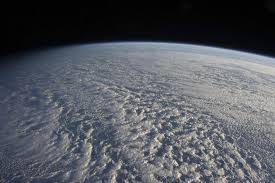


NEW YORK: The invisible force field looks to be taken from a Star-Trek movie script — its invisible, it’s stable, and it doesn’t permit injurious space radiation faster into our planet’s atmosphere. Massachusetts Institute of Technology researchers say it was first noticed by two NASA spacecrafts orbiting the Van Allen radiation belt on a 7,200 miles (11,000 km) altitude.
This new invisible force field protecting Earth does a very good job at blocking highly radioactive electrons populating Earth’s upper atmospheric region. NASA said these “ultrarelativistic” electrons were extremely aggressive and they easily circulate in space at speeds very close to the speed of light. They also fry everything on their way from spacecrafts to communication satellites. NASA launched two probe crafts, the Van Allen probes, for the sole purpose of studying these electrons and improving the safety level of their spacecrafts and crew.
NASA says although these electrons are attracted towards Earth by its magnetic field, they cannot get closer than 7,200 miles to it due an invisible shield-like barrier, never detected before. This barrier protects Earth from harmful cosmic radiation and has already done a good job in the past by deflecting several solar blows directed towards Earth. It seems that this mysterious force field operates on low frequency electromagnetism, but its source is still uncertain.
MIT scientists had several theories related to its origin. They first believed it had something to do with Earth’s magnetic field. They thought this field held the barrier in its place, but after careful examinations they saw the barrier was still there although the magnetic field was 30% less intense. Above South America, for instance, Earth’s magnetic field drops in intensity, but the barrier doesn’t cease to protect humans from cosmic radiations.
Scientists thought then that a probable cause for the barrier was the long range radio waves coming from Earth. Still, they were wrong once more, since these waves usually only interact with neutral electrons, and cannot help against ultrarelativistic particles.
In the end, researchers found out that the barrier was probably generated by the plasmaspheric hiss, a phenomenon occurring in the upper parts of the atmosphere. This plasmaspheric hiss deviates from orbit the fast-moving dangerous particles, and sets them on a parallel plan to one of the Earth’s magnetic field lines, forcing them to fall into the atmosphere, collide with neutrally charged particles, and disappear.
Mary Hudson, professor of physics, said the new NASA observations made over more than two years through its Van Allen probes confirmed the inner barrier’s existence, and brought invaluable new information to the particle acceleration theory.

Karachi Port sets 138-year cargo handling record
KARACHI: Pakistan's maritime sector has achieved a major milestone as Karachi Port set a new record in its 138-year history...