Customs Today
  • Home
  • Islamabad
  • Karachi
  • Lahore
  • National
  • Transfers and Postings
  • Chambers & Associations
  • Business
No Result
View All Result
Customs Today
  • Home
  • Islamabad
  • Karachi
  • Lahore
  • National
  • Transfers and Postings
  • Chambers & Associations
  • Business
No Result
View All Result
Customs Today
No Result
View All Result
Home Science & Technology Science

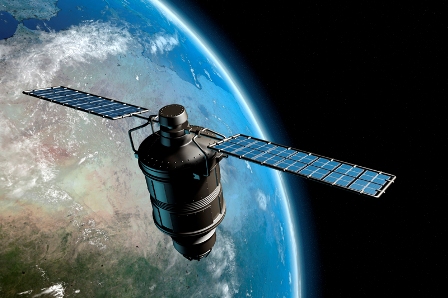
New satellite to improve monitoring of space climate

byCustoms Today Report
24/02/2015
in Science, Science & Technology
Share on FacebookShare on Twitter

NEW YORK: A new satellite is on a 1.5 million-kilometer, 110-day journey toward the sun. Once it reaches its orbit, DSCOVR the Deep Space Climate Observatory will replace an aging craft to monitor space weather.

DSCOVR will be fixed in orbit at L1, the so-called Lagrange point where the gravitational pull of the sun and of Earth cancel each other out. From this distant outpost, it will document the continuous stream of charged solar particles.


You might also like

Tesla driverless system to use updated radar technology

12/09/2016

Apple to develop its own self-driving technology

10/09/2016

Life on Earth is mostly protected from those particles by the planet’s magnetic field and atmosphere. But Thomas Berger, director of the National Oceanic and Atmospheric Administration’s Space Weather Prediction Center in Boulder, Colorado, said large-scale eruptions from the sun, called coronal mass ejections, can still be dangerous.

“Those are really, really large magnetic clouds that are expelled from the sun at very, very high speeds … and when those impact the Earth, that’s like a tsunami or a hurricane impacting the Earth in terms of space weather,” he said.

Violent space weather can disable electric power grids, knock out satellites, and interrupt radio signals and aviation communications systems. This year marks the peak of the 11-year solar cycle, when extreme weather on the sun can most affect life on Earth.

Berger said full recovery from a really bad solar storm could take four to 10 years and cost between $1 trillion and $2 trillion, according to a recent report published by the National Research Council.

“There really is not much we can do about it, given that the sun is a gigantic star and we are just a tiny little planet in its orbit. However,” he pointed out, “NOAA’s job and the Space Weather Prediction Center’s job in particular is to predict these phenomena and give people the watches, warnings and alerts that they need to take mitigation action.”


Tags: New satellite to improve monitoring of space climate

Related Stories

Tesla driverless system to use updated radar technology

byCT Report
12/09/2016

WASHINGTON: Electric carmaker Tesla announced Sunday it was upgrading its Autopilot software to use more advanced radar technology. In a...

Apple to develop its own self-driving technology

byCT Report
10/09/2016

SAN FRANCISCO: Apple may not become an automaker, but it still wants to develop its own self-driving technology. The iPhone-maker's...

NASA spots slowest known magnetar

byCT Report
10/09/2016

WASHINGTON: Astronomers have found evidence of a magnetar - magnetised neutron star - that spins much slower than the slowest...

‘YouTubers’ outshining old-school television

byCT Report
09/08/2016

SAN FRANCISCO: A media revolution is taking place, and most people over 35 years of age aren’t tuned in. Millennial...

Next Post

Google planes to introduce balloon-powered internet and kite-powered energy to India

  • Terms and Conditions
  • Disclaimer

© 2011 Customs Today -World's first newspaper on customs. Customs Today.

No Result
View All Result
  • Transfers and Postings
  • Latest News
  • Karachi
  • Islamabad
  • Lahore
  • National
  • Chambers & Associations
  • Business
  • About Us

© 2011 Customs Today -World's first newspaper on customs. Customs Today.