Customs Today
  • Home
  • Islamabad
  • Karachi
  • Lahore
  • National
  • Transfers and Postings
  • Chambers & Associations
  • Business
No Result
View All Result
Customs Today
  • Home
  • Islamabad
  • Karachi
  • Lahore
  • National
  • Transfers and Postings
  • Chambers & Associations
  • Business
No Result
View All Result
Customs Today
No Result
View All Result
Home International Customs New Zealand

New Zealand dairy aid in Myanmar hoping to foster a love for milk

byCT Report
26/01/2018
in New Zealand
Share on FacebookShare on Twitter

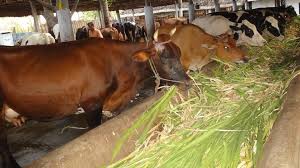
WILLING TON: A few cows are tied to a tree in the 40 degree Celsius heat. That’s how Myanmar dairy farmer U Ouh Kyau grazes his cattle, as is the way in the Southeast Asian nation now blighted by ethnic cleansing. As a cow wrestles against a rope tying it from nose to branch, visiting dairy advisor Kent Weston-Arnold inspects a slightly underweight six-month-old calf. okoroa-born Weston-Arnold is technical advisor to the Myanmar Dairy Excellence Project, a $6 million New Zealand aid effort now entering its fourth year. The “agriculture diplomacy” project hopes to foster a love for milk in Myanmar, but also has New Zealand’s dairy trade interests front of mind raditionally, Myanmar dairy farmers have a handful of cows tied to trees. Feed and water is given twice daily, in the 40C heat. Milk yields are a low six to eight litres a day, a third of what is achieved in New Zealand. The fodder often used is nutritionless rice straw. There’s only three or four suppliers who refrigerate and most equipment is never washed with hot water. Today’s first stop is the Shwe Oh dairy farm on the city’s northern outskirts, where farmer U Tin Win and his son Ko Kyan Shone Kyin run 170 cattle. Shwe Oh is state of the art for Myanmar: this week they’re moving 60 milch cows into a new barn, and are finishing a modern herringbone-design milking shed capable of handling 10 cows.

The tropical grass grows in long, thick-bladed tufts which can be cut for fodder every 19 days during the summer. Importantly, it’s half the price of rice straw, has 60 per cent more energy and 100 per cent more protein. If we could replace the use of rice straw with the use of good quality fodder, that would have a massive impact on the industry,” Weston-Arnold says. The success of mombasa is apparent in Sagaing, near Mandalay, where farmers U Winbo Bo and U Hmwe Thein are now using it for fodder.

You might also like

New Zealand shares fall as mainland Chinese markets reopen

03/02/2020

NZ stock market’s prospects lift

30/01/2020

Related Stories

New Zealand shares fall as mainland Chinese markets reopen

byadmin
03/02/2020

New Zealand shares fell as the coronavirus outbreak continued to weigh on investor confidence, however, it weathered a savage reopening...

NZ stock market’s prospects lift

byadmin
30/01/2020

Law firm Chapman Tripp's annual review has found a revamp of the the NZX's rules, fees, and the move to...

Trivago hit with 18 Commerce Commission complaints

byadmin
21/01/2020

The Commerce Commission says it has received 18 complaints about hotel comparison website Trivago. Trivago, part-owned by US-based Expedia, has...

Grant Biggar
Fin-Tech & Fin-Services Investing and Advising US, UK, NZ & Aus
Greater New York City Area 
Picture supplied via LinkedIn
https://www.linkedin.com/in/grant-biggar-8434201/

New Zealand businessman Grant Biggar owes $3m in New York taxes

byadmin
13/01/2020

A New Zealand man owes US$2 million (NZ$3m) in New York income taxes according to a decision by the New...

Next Post

Oman economy to grow 3.5% in 2018 on gas output rebound

  • Terms and Conditions
  • Disclaimer

© 2011 Customs Today -World's first newspaper on customs. Customs Today.

No Result
View All Result
  • Transfers and Postings
  • Latest News
  • Karachi
  • Islamabad
  • Lahore
  • National
  • Chambers & Associations
  • Business
  • About Us

© 2011 Customs Today -World's first newspaper on customs. Customs Today.