
ABUJA: Nigeria, Africa’s largest producer of crude oil is cutting costs and more importantly, cutting the huge environmental degradation associated with the transport of crude oil through a maze of old and leaky pipelines to its four domestic refineries.
International Oil Companies (IOCs) operating in Nigeria and the state oil firm, the Nigerian National Petroleum Corporation (NNPC) regularly face attacks on their production or transportation assets since an insurgency began in 2006 by armed militants campaigning for increased local share of the oil producing area (or Niger Delta’s) wealth.
Today organised crime groups are drilling into the pipelines — in turn used to transport crude, gas and condensate — to tap oil into barges for local refining or for sale to vessels waiting offshore.
About 240,000 barrels of crude, close to what spilled in 1989 when the Exxon Valdez tanker ran aground off Alaska, leaks on average daily in the Niger Delta, where some of earth’s most lucrative oil deposits exist.
To bypass this daunting security and environmental challenge, the NNPC in December 2010 awarded a contract to PPP Fluid Mechanics (PPPFM) and Ocean Marine Solutions Limited (OMS) for the transportation of oil by marine vessels from the Escravos terminal to Warri refinery through an international competitive bidding exercise that included 13 other companies.
Nigeria’s Warri and Kaduna refineries had been shut for 48 months before the engagement of PPPFM due to a lack of supply of crude oil feed stock.
Using the existing pipelines had become uneconomical for the NNPC which spent an average of $121 million to maintain and repair the Escravos to Warri broken crude oil pipeline that had an unusually high and environmentally damaging 40 percent loss of crude oil pumped through it.
IOCs had previously borne the brunt of the sabotage but now it is equally beginning to hit the Nigerian economy.
Shell’s former CEO, Peter Voser, mentioned in 2013 that the company had “seen a marked escalation in security problems and theft in Nigeria in 2013,” which could lead to a loss of “$12bn for the Nigerian government on an annualised basis”.
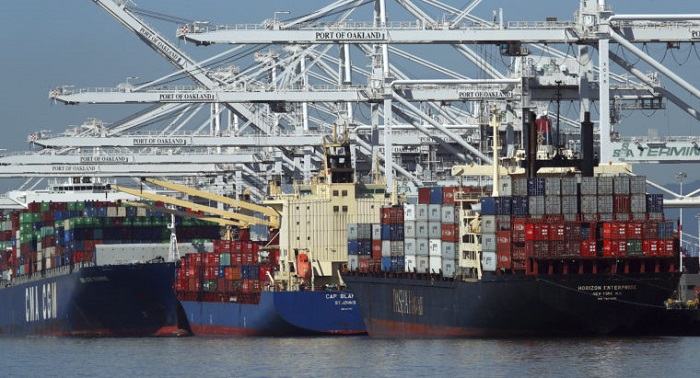
Shipping activity at Port Qasim on February 11
KARACHI: Three ships namely, Glen Canyon, Al-Salam- II and TSM Pollux carrying Containers, Gas oil and Palm oil were arranged...