ABUJA: The National President of Poultry Association of Nigeria, Ayoola Oduntan said a total of N660 billion was spent to import 1.2 million metric tons (MT) of frozen chickens into the country despite existing ban.
Oduntan said, this was four times greater than what was produced locally and exceeded the current industry capacity of 650, 000 metric tons (MT).


He puts Nigeria’s poultry demand (consumption) at 1.5 million MT annually but admitted that the industry could only produce 300, 000 MT in 2014.
He spoke during a workshop/ press briefing in Abuja tagged: “The Economic and Health implications of Smuggled Poultry Products”, adding that activities of smugglers were impacting negatively on locally produced poultry products.
Oduntan said: “As at 2014, locally produced chicken production estimated at 300, 000 metric tons, a capacity utilization of 46 per cent in an industry that currently boasts of 650, 000MT installed capacity.
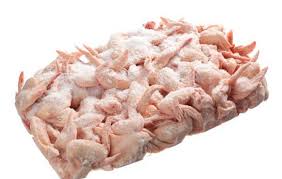
“In the same year, 1.2 million metric tons of frozen chicken, valued at N660 billion (equivalent to $2.75 billion) was imported.
“This was four times greater than what was produced locally and exceeding the current industry capacity. A clear point here is that local poultry industry is far reaching its growth elastic limit.”
The industry, he said, has the potential to create jobs for millions of unemployed Nigerians if the activities of smugglers are regulated by policy makers.
He observed that reducing smuggling just by 30 per cent will result in the creation of 1 million jobs in 12 months.
Oduntan said: “Given all necessary and strategic support, the industry will make significant contribution to the national Gross Domestic Product (GDP), creating thousands of jobs and stabilizing the food and nutrition needs of the populace while also boosting rural economies as most poultry operations are rural based.
“At the primary production level, the poultry industry presently consumes 2 million MT of maize and 750 MT of soya beans, thus providing massive employment for thousands of Nigerians.
“To fully utilize the balance of the industry’s installed capacity of additional 350,000 MT will translate to significant benefits through more job creation in form of 350, 000 new jobs in maize production; 100, 000 new jobs in soya production, 75, 000 new jobs in processing and 500,000 new jobs in ancillary raw materials, products and services.
“Reducing smuggling just by 30 per cent will result in the creation of 1 million jobs. So why not do away with smuggling and stop exporting jobs from Nigeria, by enriching other nations?
“The future of the Nigerian poultry industry hinges delicately on firm decisions on the part of policy makers to reverse the current unwholesome trends that tend to tilt the balance more in favour of smugglers while putting the local producers in jeopardy.
“The investments of local producers need urgent safeguard and support that would enable them to remain competitive in the face of smugglers’ onslaught.”
He warned that smuggled poultry meat contained chemicals which are dangerous to human health.
“While locally farmed poultry meats are sold without preservatives, the smuggled poultry meat is preserved with hazardous chemicals. Formalin load in all smuggled poultry products ranges from 42.9 to 63.3ml.kg.
“This portends serious danger for the consumers as some of these toxic chemicals are known to be carcinogenic,” he added.