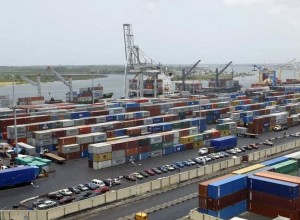
ABUJA: Two bills will soon be passed in Nigeria, opening the door to private sector investment in the country’s ports.
The Nigerian Ports and Harbour Authority bill and National Transportation Commission bill have been going through the political system in Nigeria, but have thus far not been ratified.
However, “they will happen” and will shake up Nigeria’s ports and maritime sector, according to senior advocate of Nigeria Olasupo Shasore, a former governor of Lagos.
The two bills aim to decentralise port management in Nigeria, separating the current fusion of Nigerian Ports Authority’s role of both service provider and regulator.
The bills will establish a commission for the economic and regulatory framework for the transport of goods.
“It’s an important development,” said Mr Shasore. “NPA will be reduced to being operators, opening the door for private sector investment.”
As part of the milestone move, rail links will be dragged closer to ports. “It will force the government to look at trans-shipment,” said Mr Shasore.
Investment, as part of the bills, will include ship repairs and dry docking, and inland waterways development, said a Nigerian Ports Authority spokesperson.
The new bills are expected to be passed as soon as the new government, led by Muhammadu Buhari, makes its mark.
“The new government has brought about new confidence and new horizons,” said Mr Shasore.
“We’re getting it right this time round, with round pegs in round holes.”
The new government replaced top executives at Nigerian National Petroleum Company this summer, and controversially banned around 100 oil tankers from entering Nigerian waters in what is thought to be a major anti-corruption drive.
Oil theft is a known problem in Nigeria, costing the government billions of dollars in lost revenue.

Singapore, Nigeria trade volume hits N846b
SINGAPORE: The trade volume between Nigeria and Singapore reached N846bn from 2011 to 2015, while the absolute balance of trade...