ABUJA: Nigeria’s new finance minister said raising non-oil revenues was her top priority, as the slump in oil prices continues to take its toll on Africa’s biggest crude exporter.
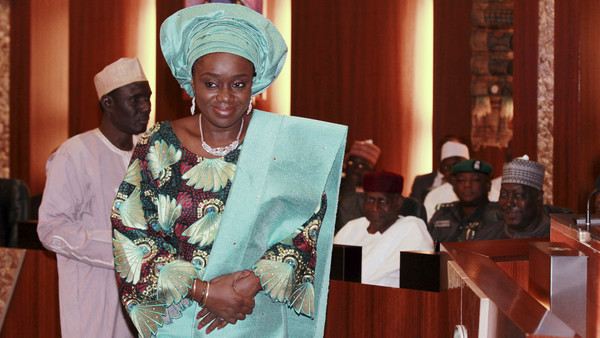
Kemi Adeosun, a 48-year-old British-born accountant, was sworn in last week by President Muhammadu Buhari nearly six months after the former military ruler took office — a delay that led some critics to complain of a policy vacuum in Africa’s larger economy.
High quality global journalism requires investment. Please share this article with others using the link below, do not cut & paste the article. See our Ts&Cs and Copyright Policy for more detail. Email [email protected] to buy additional rights. http://www.ft.com/cms/s/0/ed7107d8-8c57-11e5-a549-b89a1dfede9b.html#ixzz3rmQmPkdm
She told the Financial Times that stricter enforcement of earnings collection from federal agencies and more diligent bookkeeping were the types of “micro” issues her ministry would focus on to mitigate the effects of crude prices that remain below $50 a barrel.
Her message chimes with what Mr Buhari told his new cabinet colleagues at a retreat before they were sworn in: pare down the costs of running government ministries through simple cost-saving measures such as cutting travel and the number of vehicles in convoys.
“Forget about oil — we don’t control the price of oil. That’s not where our problems lie,” Ms Adeosun said.
For years, Ms Adeosun explained, a mindset of “we have oil” meant Abuja had practically given up collecting the right amounts from other state bodies, as she rattled off a list of federal agencies she says had habitually under-reported their revenues. “Because of oil, we’ve ignored everything else,” she said.
She added that she had already begun “drilling down into the details” with ministry staff to assess how much “parastatals” — state-run or affiliated agencies — remit to the government.
She also praised the lack of pomp and circumstance at the ministerial swearing in ceremony, a sharp contrast to state ceremonies of past governments. “The programme was a piece of paper, that’s it,” she said.
Ms Adeosun was most recently finance commissioner of Ogun state, where she focused on improving fiscal oversight at state institutions. Before that she worked for Chapel Hill Denham, a Nigerian investment bank. Until her mid-30s she lived in London, where she worked for PwC in the global risk management department.
High quality global journalism requires investment. Please share this article with others using the link below, do not cut & paste the article. See our Ts&Cs and Copyright Policy for more detail. Email [email protected] to buy additional rights. http://www.ft.com/cms/s/0/ed7107d8-8c57-11e5-a549-b89a1dfede9b.html#ixzz3rmQqgWI6
Ms Adeosun is not the first finance chief to note that a near exclusive focus on oil, which accounts for almost four-fifths of government revenues, had been poisonous for Nigeria.
Her predecessor, Ngozi Okonjo-Iweala, made a similar case at times during her tenure. But under the administration of President Goodluck Jonathan, weak oversight of oil revenues deprived the state coffers of many billions of dollars a year.
“I don’t want to say we’ve been indisciplined,” Ms Adeosun said. “But I’d say, when you have the money, you can be extravagant, flying first class instead of business [class], business instead of economy” — an acknowledgment that Nigeria’s finances are now much more precarious.
Referring to criticism from parts of Nigeria’s business community that she has considerably less experience than Ms Okonjo-Iweala, a former World Bank managing director, Ms Adeosun said her accounting background meant she had the skills to get her country’s financial house in order.
“In Nigeria we always talk about the macro issues, we always start from way up high. But we don’t pay attention to the micro ones. That’s now my job,” she said.
Mr Buhari has changed the way responsibilities are divvied up among the economic team in his cabinet. He removed the budget file from the finance ministry and gave it to the planning ministry, where he has appointed Udo Udoma, a former senator, as minister of budget and national planning.
Mr Udoma, who left his job as chairman of one of Nigeria’s largest manufacturing companies to take up the position, is joined by Okey Enelemah, the new trade, investment and industry minister. Mr Enelemah is the founder of African Capital Alliance, a Lagos-based private equity firm.

Singapore, Nigeria trade volume hits N846b
SINGAPORE: The trade volume between Nigeria and Singapore reached N846bn from 2011 to 2015, while the absolute balance of trade...