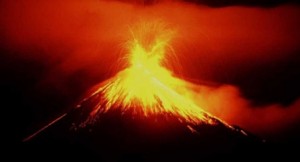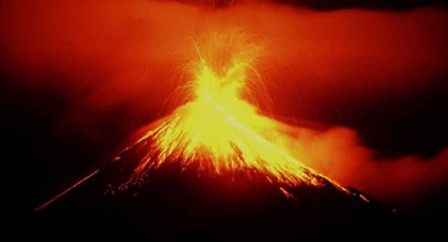
WASHING TON: Researchers hard at work at pinpointing exactly where the “mystery ash” currently plaguing the Pacific Northwest originated from, pointing initially to volcanic eruptions in Russia as the source.
Residents of Washington and Oregon noticed recently that a strange milky-looking rain has been falling on them recently, composed of equal parts ash and water. The prevailing theory is that the weather system that bore the rain across the Pacific traveled through an ash cloud, picking up the detritus and then depositing it over the region once the weather system made landfall.
You might also like


Officials from the Walla Walla County Emergency department remarked that the mysterious ash was most likely carried by global wind currents that picked up an ash plume which occurred on January 26 from the Shiveluch volcano in northeastern Russia. With Shiveluch belching another round of ash into the air, Washington and Oregon residents could see another bout of “milky rain” in the future if the prevailing winds continue.
However, Shiveluch isn’t the only possible culprit behind the mystery ash being dumped on the Pacific Northwest, as there are other active volcanoes that might have been the source of the ash. An eruption and ash ejection in Colima, Mexico, around 2,000 miles south down the shoreline of North and Central America, could have been carried far north by the jet stream, according to Derek Van Dam, CNN meteorologist. However, the likelihood of Shiveluch being the source of the ash remains high, even though it’s close to two times as distant from the region the rain is falling; scientists say that ash can travel prodigious distances on wind currents quite easily, spreading far and wide in a surprisingly short amount of time and wreak havoc across continents.
While volcanic activity seems to be the most popular theory, the origins of the ash is still yet to be determined barring the results of the chemical analysis of an actual sample. Other theories include ash from wildfires in previous years being picked up by high winds before being mixed with the storm system as it moved into the area.