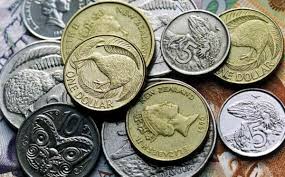
WELLINGTON: The New Zealand dollar has taken a big fall after China’s central bank unexpectedly devalued its tightly controlled currency. The New Zealand dollar shed almost a cent on Tuesday afternoon, falling from US66.30 cents to a low of US65.45c.
The Chinese devaluation was seen as an attempt to help support Chinese exports, which slumped more than 8 per cent last month. China is the world’s second largest economy and is a critical market for both New Zealand and Australia.


China was New Zealand’s top export market in the June quarter, with sales worth $2.2 billion, just ahead of Australia. But in the June year, New Zealand’s exports to China crashed almost 30 per cent, as dairy prices collapsed. Subdued demand in China is driving down prices across a range of global commodities, including dairy products, which also face a glut of supply.
Tim Kelleher, ASB’s head of institutional foreign exchange sale, said the devaluation in China had taken the market by surprise, with talk of a possible cut in September. “All the Asian currencies have been hit pretty hard. The reason China is devaluing the yuan is to make their economy more competitive for exporters,” he said.
“It puts pressure on the other peripheral currencies to do similar.” That meant the Reserve Bank would come under further pressure to cut interest rates, he said. New Zealand’s central bank has already cut its official cash rate twice this year, and economists forecast two to three more reductions before the year is out.
The Australian dollar also plunged on Tuesday as investors snapped up US dollars after China devalued. The Australian dollar was collateral damage as the US dollar shot up.
The aussie dropped from US74.4c to US73.5c within minutes. Other regional currencies, including South Korea’s won and the Singapore dollar, were also hit. Kelleher said US65.50c was a critical level of support for the kiwi, with US65c the next threshold.
“We probably need to see how it settles overnight. The risk is, we see further weakness in the currencies over the next 24 or 48 hours,” he said. The People’s Bank of China cut the yuan’s daily reference rate to the US dollar by 1.9 per cent.
It had earlier foreshadowed the move by saying the strong yuan was putting pressure on exports. China devalued the yuan after a run of poor economic data, guiding the currency to its lowest point in almost three years in a move it billed as free-market reform.
The central bank described it as a “one-off depreciation” , based on a new way of managing the exchange rate that better reflected market forces, but economists said the timing suggested it was also aimed at helping exporters.
Data released at the weekend showed that China’s exports tumbled 8.3 per cent in July, hit by weaker demand from three huge trading partners – Europe, the United States and Japan.
Guo Lei, economist at Founder Securities in Shanghai said: “We think the move is aimed to ease pressure on China’s weak exports performance in recent months and relieve imported deflation pressure”.
The world’s second-largest economy has slowed markedly this year and some economists believe it is expanding at much less than the official 2015 target of 7 per cent. Even if it meets the target, growth will come in at a 25-year low.
“Since China’s trade in goods continues to post relatively large surpluses, the yuan’s real effective exchange rate is still relatively strong versus various global currencies, and is deviating from market expectations,” the central bank said.
Meanwhile, oil prices fell amid a broader commodity decline as China’s central bank devalued its currency, making imports of raw materials more expensive in the world’s biggest consumer of metals and energy.
Oil futures slid as much as 1.1 per cent in New York, after China, the world’s second-biggest oil user, cut the yuan’s reference rate.
Michael McCarthy, a chief strategist at CMC Markets in Sydney, said: “Devaluation of the yuan means a stronger US dollar and that’s likely to weigh on commodity prices”.
“This is clearly a stimulus measure and it should be supportive of commodities. We’re seeing a currency affect initially and the stimulatory impacts of this has not been priced in yet.”