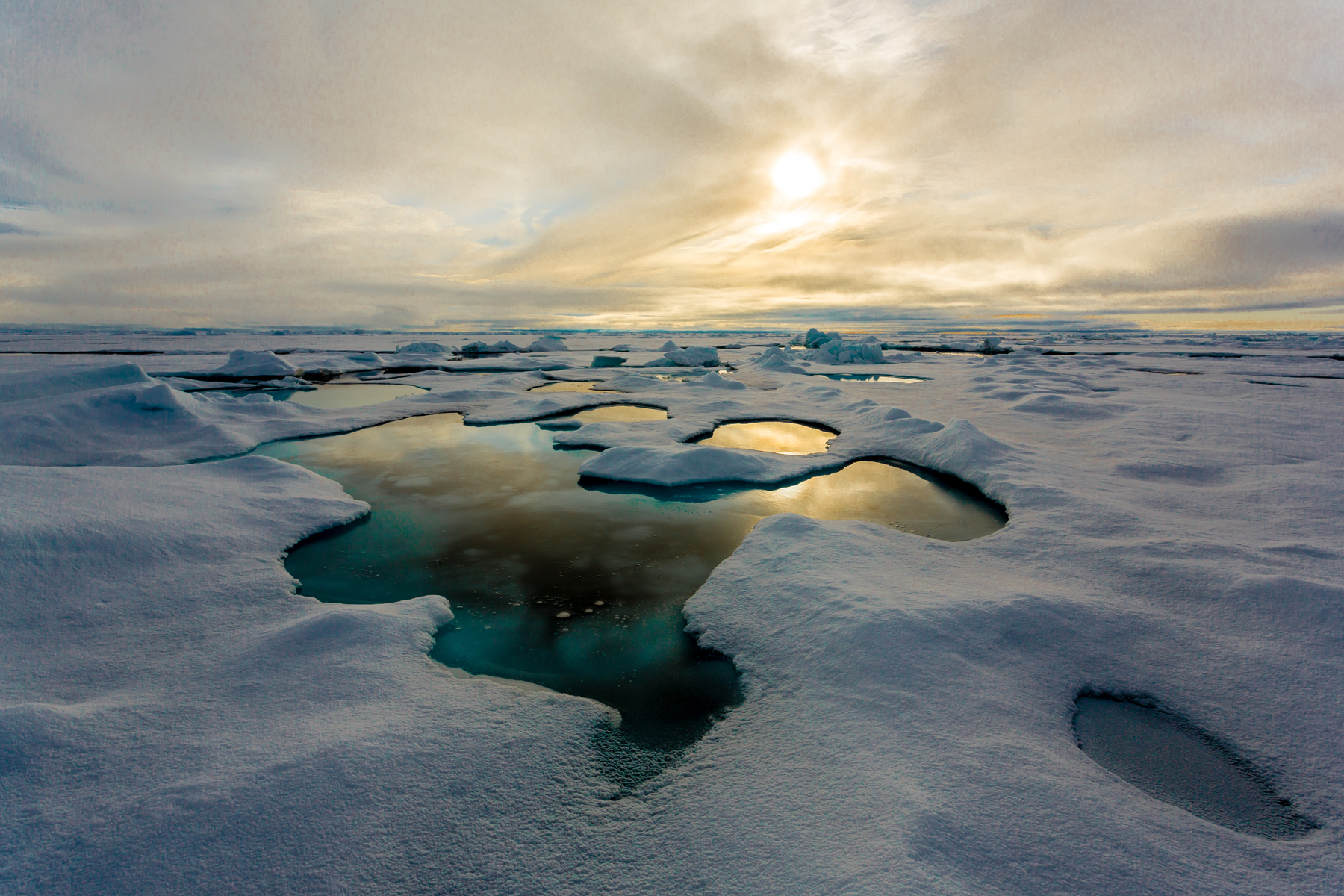
BRENT: The dangers of melting Arctic sea ice have been laid bare after new research recommend that the loss of vast areas of the ocean’s snow cover have made an important contribution to global warming in the past 15 years.
As increasing quantities of ice gives way to water during the summer months, the amount of the sun’s energy being absorbed by the sea has greatly increased, according to the report.
Scientists have calculated the impact of the melting Arctic ice for the first time and believe it is responsible for a 5 per cent increase since 2000 in the amount of solar radiation the ocean is absorbing during June, July and August – a finding that will fuel concerns about a ‘feedback loop’ of ever-greater rises in temperatures and snow thawing.
“While a 5 per cent increase may not seem like much, consider that the rate globally has remained essentially flat during that same time. No other region on Earth shows a trend of potential long-term change,” said Norman Loeb, of NASA’s Langley Research Centre in Hampton, Virginia.

Astronomers discover distant dwarf planet beyond Neptune
LONDON: A dwarf planet half the size of Britain has been found tumbling through space in the most distant reaches...