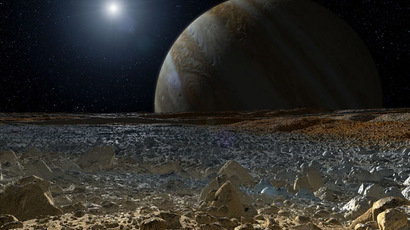
HONG KONG: Saturn’s icy moon of Enceladus subsurface ocean has a similar makeup to some of the life-sustaining salt lakes found on Earth, a new US study discovery suggested.
This small moon, astrobiologists believe, is probably the best place to look for alien life forms in the Solar System.
You might also like


Geologically active, this 505-kilometer-wide satellite has powerful geysers blasting through its icy shell.
These geysers contain water comes which from a subterranean ocean located underneath the moon’s icy surface, according to the researchers.
‘The pH of Enceladus,’ a new paper published last Wednesday in the journal Geochimica et Cosmochimica Acta, gazes into the chemical reactions that happen when the ocean water of Enceladus’ comes in contact with its rocky mantle.
The authors have based their research on data gathered aboard NASA’s Cassini spacecraft, which has been in orbit around Saturn since the year 2004.
Mass-spectrometry measurements of the gaseous and icy grains in Enceladus’ cloud were utilized in the development of a model that estimates the PH and saltiness levels of the water in the moon’s inner ocean.
Enceladus’ ocean would likely be salty and has a basic pH of 11 or 12, neutral pH being 7, says the US team’s findings. The same levels of pH found in ammonia-based glass-cleaning chemicals, though some organisms on Earth still have the capability to live in such conditions.
http://www.esbtrib.com/2015/05/08/11505/ocean-on-saturns-moon-resembles-habitable-lakes-on-earth-and-can-viably-be-able-to-nurture-alien-life-forms/