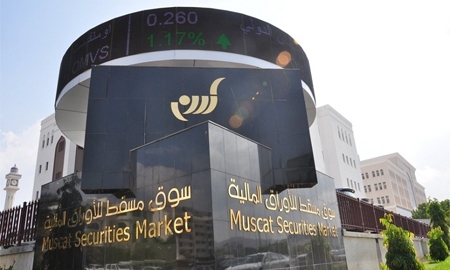
Muscat: Oman’s MSM30 (Muscat Securities Market) index dipped 2.58 percent to closed at 162 points which shows into a notional loss of OMR181 million for local investors in terms of market capitalization.
Omani bourse, along with other Gulf markets, plunged after Saudi-led coalition launched airstrikes against Yemen’s Houthi rebels that escalated the military conflict.


“Definitely, it is a fall out of the Yemen crisis, which is affecting all GCC markets. Nobody knows the real impact so far,” Loai B. Bataineh, general manager and head of investment banking group of Oman Arab Bank, told the Times of Oman.
Barring Abu Dhabi, all Gulf bourses were down. Kuwait fell 2.42 per cent, Qatar down by 0.81 per cent, Bahrain receded by 0.71 per cent and Dubai by 0.8 per cent. Abu Dhabi, Saudi and Qatar bourses recovered substantially towards the end of the session, after tumbling to recent low levels. Saudi Arabia’s main index tumbled five per cent on Wednesday amid reports that the kingdom was amassing troops and military equipment on its border with Yemen.
“People (investors) who are away from the region are in a panic situation, than those who are within the region. They will try to offload (their holdings), which is due to psychological reasons. The local investors are buyers since it creates opportunity for them,” added Bataineh.
Echoing a similar view, N Anilkumar, senior vice-president, Asset Management, Financial Corporation, said; “The influence of an overall fall in oil price is still there in the market, which is relatively a long-term concern. The crisis in Yemen will have a temporary effect. The bigger worry for Omani bourse is oil price remaining below $60 per barrel.”
“Dividend adjustment is another reason for the plunge in the market. But the investors are not affected since they get dividends.”
Almost all blue-chip stocks, including Bank Muscat, Ooredoo, Oman Telecommunications Company, National Bank of Oman, ONIC Holding, Renaissance Services and Oman Cement, lost ground on panic selling. Bank Muscat lost 3.03 per cent to close at 512 baisas, while Ooredo and Oman Cement plunged by 7.78 per cent and 7.03 per cent to close at 664 baisas and 476 baisas, respectively.
“The market recovery now will depend a lot on a rise in oil price in the international market, which in turn depends on the decision of Opec in its forthcoming meeting,” noted Anilkumar. An Opec meeting is scheduled for June to take a decision on production cuts. “We expect the market to do better in the second half of this year,” opined Anilkumar.