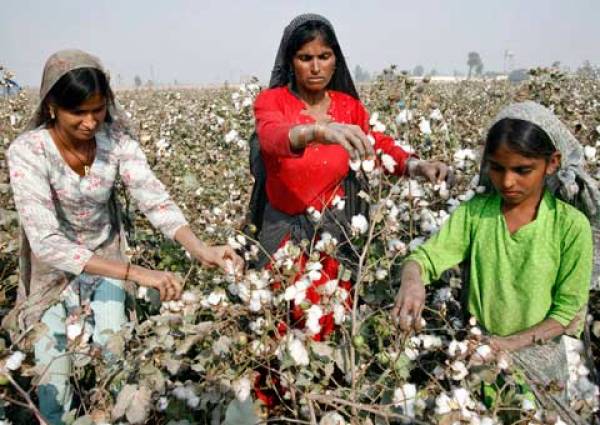
KARACHI: Speakers at a seminar admitted economic and health problems faced by cotton-picking women in Sindh and stressed for a paradigm shift in policies relating to majority of the half-a-million cotton-picking workers in the province.
“More than 500,000 cotton-picking workers are involved in the business across the province – a dominant majority of them are women and most of them are Kolhi and Bheel – minority Hindu Dalits,” said Javed Hussain, head of the Sindh Community Foundation (SCF), which organised the programme at a hotel.
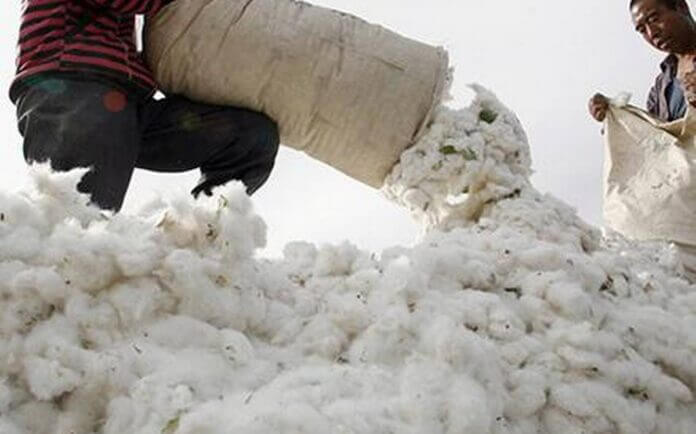

Mr Hussain said his organisation was involved in mapping the population involved in picking cotton and finding their key socio-economic issues. The form of labour was neither recognised by the law nor any guarantees were there to protect rights of agriculture workers, he said. Due to unavailability of such laws cotton-picking women experienced social and economic marginalisation, he said.
Haris Gazdar of the Collective for Social Science Research said the health of cotton-picking women had deteriorated. While they played a substantial role in the country’s economic development, their children’s health was worse than other children, he said.
He said stunting in the children was 42 per cent in 2001, which climbed up to 44pc in 2011. Similarly, other factors relating to their children’s health and malnutrition went downwards.
Mr Gazdar said women’s ratio in the agriculture sector had increased from 65pc to 75pc in 2001. Accordingly, men’s ratio in the agriculture sector went down in same proportion. “Such feminisation of the agriculture sector enabled women to earn money, much less than what an employer gives to men for the same job.” He said cotton was the only crop where women had their exclusive niche but they were highly underpaid. “The children of the women who do not work in agriculture have 42pc stunting while the same ratio is 52pc for the children of women who work,” said Mr Gazdar. He added that another factor that drove landowners to employ women was they agreed to work as much as men at less wages.
Mr Gazdar said the Sindh agriculture department had not yet recognised women’s role in the agriculture sector despite the fact that women had dominant existence. Speakers at the programme explained that rice and cotton cultivation in Sindh and Punjab jointly account for more than one-third of women’s annual agricultural activities. Literature shared with the participants gave estimates that women accounted for 23.55pc in cotton areas. Cotton is one of the major cash crops of Sindh while Pakistan’s vital industrial and export sector, textile and clothing industry heavily rely on women.
Cotton-picking women work in the cotton fields of southern Punjab and Sindh to harvest the raw material for textile and clothing industry. Padmi Khatoon, a cotton-picking woman, said each woman in the trade received as low as Rs150 for picking 40-kilo cotton. She said the wages should be at least Rs500 per 40kg cotton.The middle-aged woman said some groups of cotton-picking women were vying for increase in their wages. She said the work had adversely affected their own and their children’s health, yet they were offered no safety measures and health benefits by the employers.
Rights activist Mehnaz Rehman demanded equal rights for all labourers and said that all neglected segments including home-based workers and bangle labourers along with cotton-picking workers be given space in the existing laws along with all the securities and guarantees.