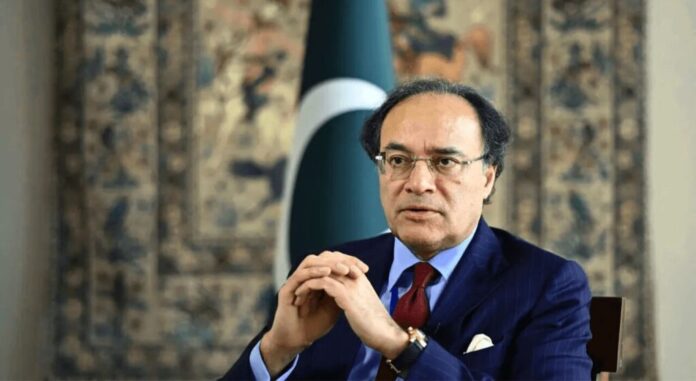
ISLAMABAD: Pakistan has consolidated its macroeconomic stability through strong fiscal discipline, improved foreign exchange reserves, and falling inflation, while aiming to maintain a growth rate of around 3.5 percent despite recent flooding, Finance Minister Muhammad Aurangzeb said in an interview with CGTN America.
The minister said the country had made “significant progress” since the IMF approved the $7 billion loan programme last year, with all global rating agencies upgrading Pakistan’s outlook in recent months.


“We have consolidated gains on the macroeconomic stability front. Our foreign exchange reserves now stand at two and a half months of import cover, inflation has fallen to single digits, and the policy rate has been halved,” he said. Fitch, S&P, and Moody’s have all upgraded Pakistan this year for the first time in nearly three years.
He said the IMF’s second review under the Extended Fund Facility had been successfully completed and a staff-level agreement reached, reflecting the Fund’s confidence in Pakistan’s economic management and reform commitment.
“We are grateful that the IMF management continues to repose trust in Pakistan’s authorities, especially on structural reforms in taxation, energy, public finance, and privatization,” he added.
Aurangzeb noted that Pakistan had also re-entered commercial markets after a gap of two and a half years, with borrowing from Middle Eastern banks and plans to issue the country’s first Panda bond before year-end.
“We even repaid a $500 million Eurobond payment last month without any market concern, which shows growing confidence,” he said, adding that Pakistan was well-positioned to repay another $1.3 billion due in April next year.
Privatization and investment momentum
The finance minister said the government had revived the privatization process that had previously stalled.
This year, we completed the first transaction — a small bank purchased by a UAE-based conglomerate which will expand and digitize its operations, he said adding the government was also confident that national airline will be privatized before the fiscal year ends.
Aurangzeb acknowledged that climate change and floods posed serious challenges to economic recovery, particularly in the agricultural sector. “Climate change is an existential issue for Pakistan. Our rice and cotton crops have been affected by flooding across three major rivers,” he said.
Despite the losses, he remained optimistic about sustaining growth.“We grew by 3 percent last year and had estimated that we will grow a little over 4% this year. Given the floods, we now expect around 3.5 percent growth.”