KARACHI: Pakistan’s international trade faces a severe double shock. Tensions with Afghanistan and the escalating US-Israel-Iran conflict threaten the national economy. Consequently, Pakistan is losing billions in exports and transit earnings.
The Ministry of Commerce recently uncovered this trade crisis, revealing the alarming figures in an official trade impact document.


Afghan Border Closure Bleeds Revenue
The conflict with Afghanistan has wiped out $850 million in export and transit earnings over the last seven months. The Afghan border has remained entirely closed since October 11, 2025. Therefore, all regional trade via the Afghan corridor has stopped, further fuelling the trade crisis.
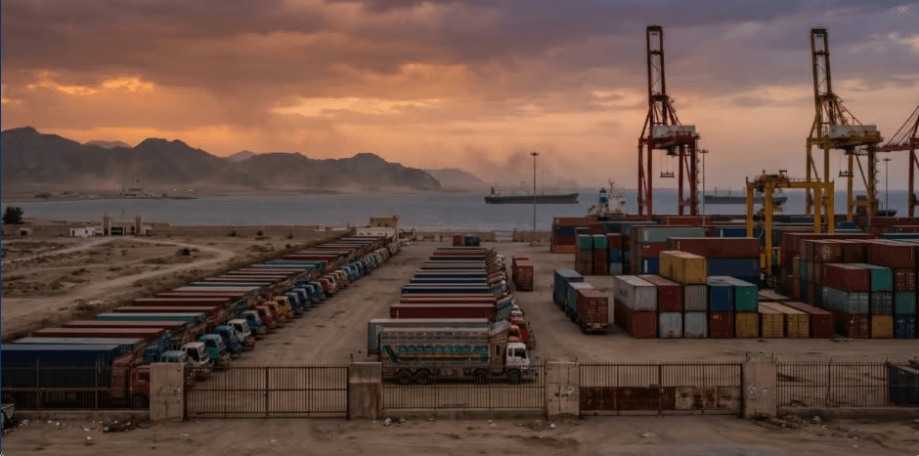
Furthermore, over 7,500 transit containers are stranded at seaports and border crossing points. Trucks carrying transit cargo remain stuck on both sides of the border.
This paralysis causes massive spoilage losses for fruit and vegetable traders. Additionally, Pakistan lost major exports, including pharmaceuticals, cement, processed food, tractors, and motorcycles.
Transporters face severe financial hits. Previously, Pakistani transporters earned an average of $200 million annually from Afghanistan and Central Asian Republics (CARs) transit. That revenue stream has completely dried up. Interestingly, Pakistan allowed UN humanitarian cargo to cross the border, but Afghanistan explicitly blocked its entry.
Middle East Crisis Threatens GCC Exports
Meanwhile, the Middle East confrontation has evolved into a global economic crisis. This conflict severely disrupts Pakistan’s trade with Gulf Cooperation Council (GCC) countries. Rising logistics costs make trade to other regions wildly expensive. In fact, the crisis threatens to slash direct exports to the GCC by $0.6 billion within the next three to six months.
Moreover, high energy prices will inflate Pakistan’s import bill. The crisis destabilizes local production and undermines global export competitiveness. Maritime routes, especially through the Strait of Hormuz, face severe disruptions. This directly impacts UAE logistics. Previously, 80 percent of Pakistan’s GCC trade flowed through the Jebel Ali port.
Most international shipping lines suspended Pakistan-GCC operations in March 2026. Fortunately, some operations resumed in April. Currently, PNSC oil tankers bring petrol from Saudi Arabia and the UAE. Additionally, a small PNSC commercial vessel launched operations from Karachi to Khorfakkan on May 18, 2026. Air logistics also suffered a massive 30 percent cancellation rate in March before recovering in April.
How to Survive the Trade Crisis? Strategic Shifts & Future Logistics
To survive, the government is executing alternative strategies. Forward transit cargo for CARs can now re-route via Iran or China. Traders can also use airlifts or re-export Afghan Transit Trade (ATT) cargo to its origin. Furthermore, authorities waived the Financial Instrument condition for Kinnow and Potato exports to CIS countries via Iran.
This strategic pivot is working. Since December 2025, Pakistan successfully exported over 70,000 kgs of sesame seeds to CARs via the Iran Corridor. These exports generated $40.2 million. Authorities also granted similar waivers for specific imports and land-route exports of food, medicine, and tents to Iran, Azerbaijan, and CARs.
Diplomatic efforts are expanding rapidly. Officials held a vital meeting with China at MoFA on March 19, 2026. Later, a QTTA meeting took place on April 7 in China and Kyrgyzstan. Leaders discussed new routes and the inclusion of Uzbekistan and Tajikistan.
Moving forward, the Ministry of Commerce recommends aggressively diversifying export products and markets. They emphasize boosting long-term food exports. Furthermore, the ministry suggests cutting regional land route logistics costs. Finally, Pakistan must explore new logistics agreements with Oman and Saudi Arabia for direct shipping to Jeddah and Sohar ports to bypass maritime inflation.