ISLAMABAD: Pakistan and Iran are likely to resolve impediments in bilateral trade during Iranian President Hassan Rouhani’s visit to Pakistan.
Iranian President Hassan Rouhani would visit Islamabad soon to discuss issues pertaining to bilateral ties including trade and economic relations. Presently, Pakistan exports mangoes, rice, kinnows, potatoes and meat cereals, meat, edible meat offal; edible fruits, nuts, peel of citrus fruit, melons; cotton; paper and paperboard, and articles of pulp to Iran while imports from Iran includes petro chemicals, plastic products, bitumen, paraffin, iron scrap and many other chemicals and machinery related products organic; ores, slag and ash; mineral fuels, oils, distillation products; and iron and steel. But, Iran is facing sanctions from the United States, United Nations and the European Union for the last several decades.
You might also like
“UN economic sanctions on Iran as well as indirect trade, smuggling, non availability of banking channels, non operational system of barter trade, transportation-related issues, customs duties and others are marooning efforts made by both the countries to enhance the volume of bilateral trade,” a well- placed source at Ministry of Commerce (MoC) told this scribe here the other day, adding that trade relations between both countries often concerned with security issues such as smuggling, drug trafficking and encroachment of non-state actors along the border areas.
The source said that there exist a lot of potential to take bilateral trade volume to over $ 2billion mark by curtailing smuggling and increasing direct trade. The source said that MoC favoured bilateral trade in local currencies as China and Russia had already started trade in their local currencies while barter trade was another viable option. “However, some transportation-related issues between the two countries hampering trade activities therefore the two governments must identify them for their early resolution,” the source observed.
The source said that MoC had also sought recommendations and proposals from stakeholders along with practical measures to move forward on barter trade and opening of border crossings between the two countries. Moreover the source said that MoC had also held detailed discussions with Trading Corporation of Pakistan (TCP) on possible consultations with Iranian side on the exportable surplus of various commodities. The source said that despite the fact that several other economies had defied international sanctions on Iran and maintained trade relations with Iran, however, bilateral trade between Pakistan and Iran remained low due to international restrictions.
“Statistics maintained by International Monetary Fund (IMF) about Iranian trade partners, rank Pakistan 11th in the top trading partners of Iran, even then Pakistan has less than one percent share in Iran’s total trade whereas other regional countries like China, India, the United Arab Emirates, Russia and Turkey have major share in Iranian trade volume” the source said adding that other countries in the list of top 10 included China, European Union, the United Arab Emirates, South Korea, Turkey, Japan, India, Russia, South Africa and Brazil.
The source said that although both the two countries had agreed to open bank branches and currency swap but the issues remained inconclusive as Iran offered that Iran’s Bank Milli and Pakistan’s National Bank could open branches on reciprocal basis in recent past with condition that there should be no embargo on Pakistan-Iran trade as other countries of the world were doing trade with Iran.
The source said that proposals regarding permitting trade between the two countries in local currencies instead of dollars as well regularization of trade through railways and road were under discussion in MoC. However, the source said that MoC was of a strong view that the banking channel between the two countries was a must as the business transactions were routed through the Asian Clearing Union, which was more time consuming than a normal letter of credit (LC), while opening a letter of credit through Iran’s sister companies in Dubai also added to the cost and benefits Dubai banks.
Similarly, the source said direct financial transactions were also necessary as the revival of Gul Train (freight train Islamabad-Istanbul via Tehran) would boost the Pakistan–Iran trade relations. “Pakistan has identified five places for setting up trading centers along the Pak-Iran border, i.e., Taftan-Minjaveh, Ladgashtjalaq, Parome-Kuhak, Mand-Peshin and Santsar-Nobandan” the source said adding that purpose of these common border markets was to sell goods at a confessional rate of customs duty and other taxes in order to control the growing cross border illegal trade.
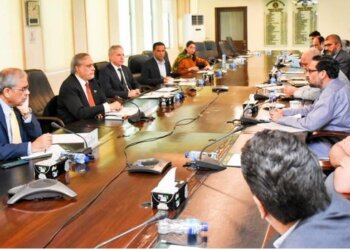
It is pertinent to note here that last month Commerce Minister Khurram Dastgir Khan in a meeting with Iranian Economic and Finance Minister Dr. Ali Taieb Nia called for making the existing Preferential Trade agreement with Iran operational effectively and to include more items of trade in the reduced tariff list.
He also emphasized the need to engage in a constructive and positive dialogue to develop trade relations between Pakistan and Iran on mutually beneficial terms and make them more sustainable. Similarly, Finance Minister Ishaq Dar also pressed both countries to build mutual confidence to overcome the impediments in barter trade and commodity exchanges facilities, enabling the two countries to benefit from their proximity and neighborhood.