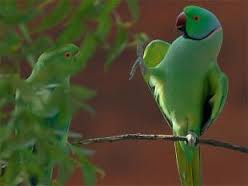


MEXICO: A team of scientists, including one of Indian-origin, has uncovered key structural differences in the brains of parrots that may explain their unparalleled ability to imitate sounds and human speech.
The results also may lend insight into the neural mechanisms of human speech.
“This opens up a huge avenue of research in parrots to understand how parrots are processing the information necessary to copy novel sounds and what are the mechanisms that underlie imitation of human speech sounds,” said Mukta Chakraborty, associate professor of neurobiology at Duke University.
Parrots are one of the few animals considered “vocal learners,” meaning they can imitate sounds.
Researchers have been trying to figure out why some bird species are better imitators than others.
By examining gene expression patterns, the study found that parrot brains are structured differently than the brains of songbirds and hummingbirds, which also exhibit vocal learning.
In addition to having defined centres in the brain that control vocal learning called “cores,” parrots have what the scientists call “shells” or outer rings, which are also involved in vocal learning.
The shells are relatively bigger in species of parrots that are well known for their ability to imitate human speech, the team found.
Even the most ancient of the parrot species they studied, the Kea of New Zealand, has a shell structure — albeit rudimentary.

Karachi Port sets 138-year cargo handling record
KARACHI: Pakistan's maritime sector has achieved a major milestone as Karachi Port set a new record in its 138-year history...