

Customs Today
  • Home
  • Islamabad
  • Karachi
  • Lahore
  • National
  • Transfers and Postings
  • Chambers & Associations
  • Business
No Result
View All Result
Customs Today
  • Home
  • Islamabad
  • Karachi
  • Lahore
  • National
  • Transfers and Postings
  • Chambers & Associations
  • Business
No Result
View All Result
Customs Today
No Result
View All Result
Home Science & Technology Science

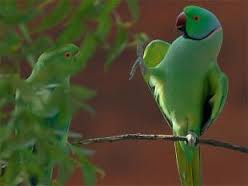
Parrots are one of the few animals considered “vocal learners,”

byCustoms Today Report
25/06/2015
in Science, Science & Technology
Share on FacebookShare on Twitter

You might also like

Tesla driverless system to use updated radar technology

12/09/2016

Apple to develop its own self-driving technology

10/09/2016

MEXICO: A team of scientists, including one of Indian-origin, has uncovered key structural differences in the brains of parrots that may explain their unparalleled ability to imitate sounds and human speech.
The results also may lend insight into the neural mechanisms of human speech.
“This opens up a huge avenue of research in parrots to understand how parrots are processing the information necessary to copy novel sounds and what are the mechanisms that underlie imitation of human speech sounds,” said Mukta Chakraborty, associate professor of neurobiology at Duke University.
Parrots are one of the few animals considered “vocal learners,” meaning they can imitate sounds.
Researchers have been trying to figure out why some bird species are better imitators than others.
By examining gene expression patterns, the study found that parrot brains are structured differently than the brains of songbirds and hummingbirds, which also exhibit vocal learning.
In addition to having defined centres in the brain that control vocal learning called “cores,” parrots have what the scientists call “shells” or outer rings, which are also involved in vocal learning.
The shells are relatively bigger in species of parrots that are well known for their ability to imitate human speech, the team found.
Even the most ancient of the parrot species they studied, the Kea of New Zealand, has a shell structure — albeit rudimentary.

Related Stories

Tesla driverless system to use updated radar technology

byCT Report
12/09/2016

WASHINGTON: Electric carmaker Tesla announced Sunday it was upgrading its Autopilot software to use more advanced radar technology. In a...

Apple to develop its own self-driving technology

byCT Report
10/09/2016

SAN FRANCISCO: Apple may not become an automaker, but it still wants to develop its own self-driving technology. The iPhone-maker's...

NASA spots slowest known magnetar

byCT Report
10/09/2016

WASHINGTON: Astronomers have found evidence of a magnetar - magnetised neutron star - that spins much slower than the slowest...

‘YouTubers’ outshining old-school television

byCT Report
09/08/2016

SAN FRANCISCO: A media revolution is taking place, and most people over 35 years of age aren’t tuned in. Millennial...

Next Post

South Korean stocks: KOSPI sheds 0.47pts at end

  • Terms and Conditions
  • Disclaimer

© 2011 Customs Today -World's first newspaper on customs. Customs Today.

No Result
View All Result
  • Transfers and Postings
  • Latest News
  • Karachi
  • Islamabad
  • Lahore
  • National
  • Chambers & Associations
  • Business
  • About Us

© 2011 Customs Today -World's first newspaper on customs. Customs Today.