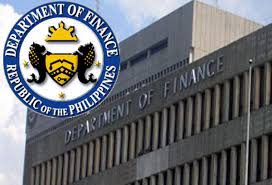
MANILA: The Department of Finance (DOF) is scheduling the changes in automobile taxation to allow the government implement reforms in the transportation industry.
For a start, the implementation of the proposed automobile tax increase would begin in 2018, enough leeway for the government to fix the rail transit system and put in place additional alternative modes of city travel that would encourage people to
use mass transport. DOF wants to restructure the excise tax on automobiles to generate additional revenue and help deal with the worsening traffic crisis in Metro Manila and other highly congested urban centers.
“So we have a year to fix it (transport mess). We are not imposing this merely to make life hard for people. We are imposing this to finance (our) infrastructure needs,” said Carlos Dominguez III, DOF secretary.
Dominguez also said a highly progressive tax on automobiles will discourage the purchase of new cars, which in turn, will help stop traffic congestion from getting worse, and reduce air pollution and the carbon footprint.
“What’s the point of buying a new car and not be able to move in the streets? We want to direct the people to go to public transport, and we are making big investments in public transport, particularly the bus rapid transit system, and we’re fixing up the trains, whose maintenance has been neglected over the years,” Dominguez said.
He added the worsening traffic congestion is not confined only to Metro Manila, but is also happening in other major urban hubs such as the cities of Davao and Cebu. Karl Kendrick Chua, DOF undersecretary, said the reforms in the automobile excise tax being pushed by DOF involves shifting to an ad valorem system that simplifies the computation of the tax.
“Under the proposal, the tax brackets for the manufacturing price or import price can be indexed to inflation once every two years if the US dollar exchange rate is more than 10 percent,” Chua said.
“If the movement in the exchange rate is more than 20 percent, then the full movement of the exchange rate will be the basis for the indexation,” he added.
Under the DOF proposal, the tax for entry-level cars priced P600,000 and below would go up from two percent to five percent, while luxury vehicles priced over P2.1 million would be taxed 60 percent of the manufacture/import price, up from the current tax of P512,000 plus 60 percent in excess of 2.1 million. Chua noted the car industry has already enjoyed a 10-year grace period of no tax increases.
“Even with a doubling of gasoline and diesel price between 2009 and 2011 to close to P45 and P60 per liter, automobile sales continued to grow strongly,” he noted. He said the DOF proposal would affect the top 10 percent of households in terms of income the most, and increasingly the top one percent, as this is a highly progressive tax.
For instance, the DOF said a young professional who buys a Mitsubishi Mirage HB-8 model will pay P15,000 more for the car under the proposed car excise tax increase, representing a 3.36 percent hike from the current price. But a chief executive officer who purchases a Range Rover Sport SVR will pay P838,000 more, or an increase of 24.28 percent from the current price.
Along with restructuring the excise tax on automobiles, the DOF is proposing to adjust the fuel excise tax, which will also affect the rich, and not the poor, the most.
Studies done by the DOF show that the top two million or the richest 10 percent consume almost 60 percent of petroleum products and commuting costs. The top 200,000 households or the richest 1 percent use 20 percent of petroleum products and commuting costs.
Chua said there is space to raise excise taxes on fuel, which have not been increased since 1997, even with oil reaching $60 per barrel because of its historically low prices in the world market. According to Chua, the Philippines currently has a very strong economy that can easily absorb the effects of higher oil prices.
As with the automobile tax, the agency said raising fuel excise taxes will help address worsening traffic congestion and pollution caused by oversupply of vehicles.
The Japan International Cooperation Agency (JICA) estimated that traffic congestion cost the Philippines P2.4 billion every day, and that greenhouse gas emissions are expected to increase to 5.72 million tons a year by 2030 if nothing is done, compared to 4.7 million tons a year in 2012.
JICA estimates also show that in solving the traffic problem, the Philippine stands to save P1.9 billion a day by 2030 (or P570 billion a year) from time cost savings alone.