MANILA: The Philippine government’s debt-to-gross domestic product (GDP) ratio improved in the first semester of the year, an indication of the country’s strong creditworthiness, the Department of Finance (DOF) said.
In the DOF Economic Bulletin, Finance Undersecretary Gil S. Beltran said the government’s debt-to-GDP ratio declined further to 43.0 percent as of June this year, a significant improvement compared with 44.7 percent at end-2015. Beltran said the continued decline in debt ratio was due to the government’s several liability management programs initiated by the DOF and the Bureau of the Treasury.

Likewise, interest payment ratios dropped as a percentage of GDP from 2.3 percent to 2.2 percent; expenditures from 13.9 percent to 11.7 percent; and revenues from 14.7 percent to 14.4 percent. For this year, the DOF expects the outstanding debt of the national government will continue to drop to 42.66 percent of GDP and 40.86 percent by next year.
The debt-to-GDP ratio, a key measure creditors monitor to determine whether a debtor is reducing its levels of indebtedeness, is projected to sustain the yearly decline until falling to about 35 percent by the end of the Duterte administration. The Philippines has investment-grade ratings assigned by Moody’s Investors Service (Baa2), Standard & Poor’s (BBB), Fitch Ratings (BBB-).
The national government’s outstanding debt hit R5.948 trillion as of the end of June this year, data from the Bureau of the Treasury showed. Meanwhile, the government is now hard-pressed squeezing more taxes out of a growing economy as its tax effort slid in the first six-months of the year after global prices of oil and rice plunged during the period.
The government’s tax effort, which is the ratio of tax collections to GDP, slightly declined as of June to 12.99 percent from 13.29 percent in the same period last year. Netting out the effects of the oil price decline and rice, this ratio rose to 13.79 percent from 13.42 percent.
Including non-tax income, government’s revenue effort reached 15.99 percent at end-June, also lower than 17.09 percent a year ago. Excluding revenues from oil and rice, this ratio improved to 13.93 percent from 12.59 percent.
Of the two key government revenue agencies, the Bureau of Customs raised taxes equivalent to 2.8 percent of GDP from 2.76 percent. The Bureau of Customs’ collections, which account for two-thirds of government revenue, comprised 10.10 percent of GDP, slightly lower compared to 10.11 percent in the previous year.
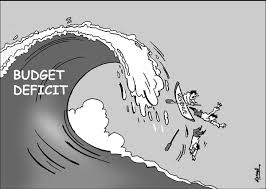
The government expenditure effort, meanwhile, rose by 0.87 percentage point to 17.7 percent, boosting GDP growth by that magnitude. The national government budget deficit, on the other hand, settled at 1.75 percent of GDP, remaining below the two percent benchmark.
“Strong fiscal fundamentals will continue to underpin robust economic growth, contributing 0.87 percentage points or 12.6 percent of the 6.9 percent growth in the first semester,” Beltran said. “A large bulk of the expenditure growth went to capital outlays which rose 28.9 percent in real terms in the first semester,” he added.