
Customs Today
  • Home
  • Islamabad
  • Karachi
  • Lahore
  • National
  • Transfers and Postings
  • Chambers & Associations
  • Business
No Result
View All Result
Customs Today
  • Home
  • Islamabad
  • Karachi
  • Lahore
  • National
  • Transfers and Postings
  • Chambers & Associations
  • Business
No Result
View All Result
Customs Today
No Result
View All Result
Home International Customs Philippines

Philippines now primarily an exporter of labor

byCT Report
22/02/2018
in Philippines
Share on FacebookShare on Twitter

MANILA: Philippines maintained a foreign trade system that consisted of exports and imports of merchandise. After the 1960s, two game-changing alterations took place in the structure of international trade. They both involved a shift in the pattern of exports and imports. Now it was services brainpower and brown power no longer merchandise, that was being exported and imported.

The first game-changer was the establishment of Opec (Organization of Petroleum Exporting Countries), which, because of the greatly enhanced price setting capability it gave them, sharply increased the petroleum-exporting countries’ earnings from their oil and gas exports. The petrodollar suddenly became a powerful currency, and the countries that had them—OPEC’s members—now had the wherewithal with which to embark upon ambitious economic development program.
You might also like

Investors troop to year’s first RTB issue; P134 billion awarded

03/02/2020
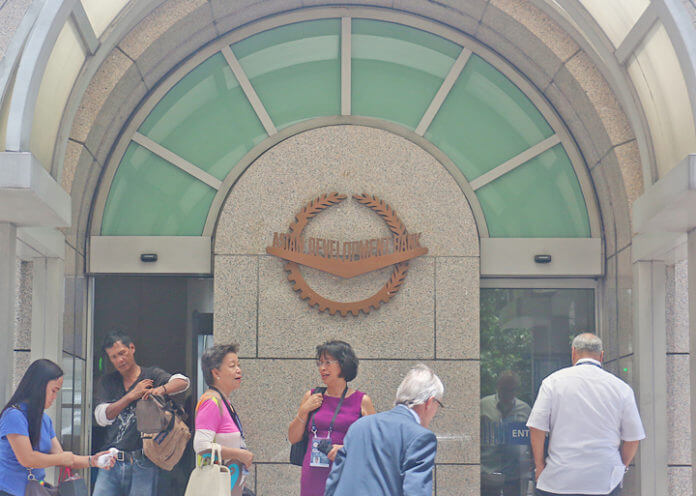
People are seen going inside the ADB building in Ortigas, report said The Asian Development Bank expects to lend an estimated $7.8 billion, or nearly $2 billion annually, from 2018 to 2021, under a new six-year country partnership strategy.It would be the highest for any 4-year period, the Manila-based multilateral lender said Thursday.“The annual average also doubles the current estimated yearly lending pipeline,” the bank said in a statement.Photo by:Nonie Reyes

ADB raises $4.25 billion from US dollar bond market to boost OCR for 2020

21/01/2020

The Middle Eastern countries Saudi Arabia, the United Arab Emirates, Bahrain and Kuwait—now needed hundreds of thousands of foreign workers to construct their infrastructure project and industrial plants. And so was born this country’s bagong bayan, the overseas Filipino worker (OFW).

To be sure, the millions of Filipinos, men as well as women, wo have gone to work in the Middle Eastern coutnries and other OPEC members are not the original OFWs, nor have their Philippines-bound remittances been the first funds that this country has received from Filipinos working overseas. Those honors belong to the Filipinos who, after the colonization of the Philippines by the United States, went to Hawaii and the Western and Southwestern states traces of a Filipino presence have been found even in Louisiana to find work and earn money for the folks back home.

But the ‘Saudi phenomenom’ was something else altogether. Millions of Filipinos and Filipinas , engineers and other technical people and ordinary workers have found work in Saudi Arabia and the other Middle Eastern countries and have generated earnings that they have then remitted to their families in this country. Economists regard those remittances as national income from exports of labor. In 2017, the OFWs-remitted an estimated $22 billion to this country. And let us not forget the approximately 250,000 Filipinos who man the world’s oil tankers, cruise ships and other vessels. They, too generate very substantial service-export earnings.

The other game-changing alteration in world trade that I cited earlier is represented by foreign companies like Texas Instruments and Intel, which are leading members of the world electronics industry. Encouraged by the various incentives granting programs of the Philippine government, these companies began establishing, in the 1970s, plants for the production of semiconductors, microcircuits and other electronic products components.
Related Stories

Investors troop to year’s first RTB issue; P134 billion awarded

byadmin
03/02/2020

THE Bureau of the Treasury (BTr) has awarded an initial P134 billion worth of three-year retail treasury bonds (RTBs), which...

People are seen going inside the ADB building in Ortigas, report said The Asian Development Bank expects to lend an estimated $7.8 billion, or nearly $2 billion annually, from 2018 to 2021, under a new six-year country partnership strategy.It would be the highest for any 4-year period, the Manila-based multilateral lender said Thursday.“The annual average also doubles the current estimated yearly lending pipeline,” the bank said in a statement.Photo by:Nonie Reyes

ADB raises $4.25 billion from US dollar bond market to boost OCR for 2020

byadmin
21/01/2020

The Asian Development Bank (ADB) raised a total of $4.25 billion from the US dollar bond market on Wednesday. The...

Govt, oil firms cite progress vs fuel smuggling

byadmin
13/01/2020

GOVERNMENT and oil companies have cited progress in curbing smuggling through a fuel marking program as the Department of Finance...

A man uses two smartphones at once outside a Huawei store in Beijing Monday, May 20, 2019. Google is assuring users of Huawei smartphones the American company's services still will work on them following U.S. government restrictions on doing business with the Chinese tech giant. (AP Photo/Ng Han Guan)

Huawei to shake up executive ranks in 2020 as Trump curbs bite deeper

byadmin
02/01/2020

Huawei Technologies Co. will overhaul its executive ranks next year after revenue growth slowed further in the latter half of...

Next Post

India's monthly oil import bill growth at a year high

  • Terms and Conditions
  • Disclaimer

© 2011 Customs Today -World's first newspaper on customs. Customs Today.

No Result
View All Result
  • Transfers and Postings
  • Latest News
  • Karachi
  • Islamabad
  • Lahore
  • National
  • Chambers & Associations
  • Business
  • About Us

© 2011 Customs Today -World's first newspaper on customs. Customs Today.