

Customs Today
  • Home
  • Islamabad
  • Karachi
  • Lahore
  • National
  • Transfers and Postings
  • Chambers & Associations
  • Business
No Result
View All Result
Customs Today
  • Home
  • Islamabad
  • Karachi
  • Lahore
  • National
  • Transfers and Postings
  • Chambers & Associations
  • Business
No Result
View All Result
Customs Today
No Result
View All Result
Home Science & Technology Science

Photoreceptors on back side of eyes scatter light by nervous fibres, distort our vision

byCustoms Today Report
04/03/2015
in Science, Science & Technology
Share on FacebookShare on Twitter

You might also like

Tesla driverless system to use updated radar technology

12/09/2016

Apple to develop its own self-driving technology

10/09/2016

MEXICO: Erez Ribak, a professor at the Technion Israel Institute of Technology, suggests that until now it was believed that the human retina is only a neural image processor and a simple detector. The optical structure of the retina is enhanced for the purpose of vision.
Ribak explains that the photoreceptors in vertebrates are positioned behind the neurons and on the back side of the eyes, which results in scattering of the light by nervous fibres and distorting of our vision.
“New research has confirmed the biological purpose for this seemingly counter-intuitive setup,” says Ribak.
Ribak cites at previous researches with mice, which suggested that Muller glia cells, a kind of metabolic cell that crosses the retina, plays an important role in managing and directing the light that has been scattered all over the retina.
The study involved testing the theory with the help of experiments on lab mouse and computer simulations. The researchers wanted to establish if colors can be concentrated in the metabolic cells.
The researchers utilized confocal microscopy for producing 3D observations of the tissues in the retina. The study found that metabolic cells were concentrating light in the photoreceptors. The research team will now use goggles filled with water to decrease corneal aberrations, which will allow observers to obtain a finer observation of the retina at depth.

Related Stories

Tesla driverless system to use updated radar technology

byCT Report
12/09/2016

WASHINGTON: Electric carmaker Tesla announced Sunday it was upgrading its Autopilot software to use more advanced radar technology. In a...

Apple to develop its own self-driving technology

byCT Report
10/09/2016

SAN FRANCISCO: Apple may not become an automaker, but it still wants to develop its own self-driving technology. The iPhone-maker's...

NASA spots slowest known magnetar

byCT Report
10/09/2016

WASHINGTON: Astronomers have found evidence of a magnetar - magnetised neutron star - that spins much slower than the slowest...

‘YouTubers’ outshining old-school television

byCT Report
09/08/2016

SAN FRANCISCO: A media revolution is taking place, and most people over 35 years of age aren’t tuned in. Millennial...

Next Post

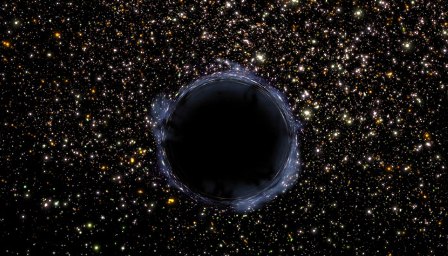
Scientists discover black hole 12b times massive than sun

  • Terms and Conditions
  • Disclaimer

© 2011 Customs Today -World's first newspaper on customs. Customs Today.

No Result
View All Result
  • Transfers and Postings
  • Latest News
  • Karachi
  • Islamabad
  • Lahore
  • National
  • Chambers & Associations
  • Business
  • About Us

© 2011 Customs Today -World's first newspaper on customs. Customs Today.