

Customs Today
  • Home
  • Islamabad
  • Karachi
  • Lahore
  • National
  • Transfers and Postings
  • Chambers & Associations
  • Business
No Result
View All Result
Customs Today
  • Home
  • Islamabad
  • Karachi
  • Lahore
  • National
  • Transfers and Postings
  • Chambers & Associations
  • Business
No Result
View All Result
Customs Today
No Result
View All Result
Home Science & Technology Science

Pink salmon face threat of acidification linked to greenhouse gas emissions

byCustoms Today Report
02/07/2015
in Science, Science & Technology
Share on FacebookShare on Twitter

You might also like

Tesla driverless system to use updated radar technology

12/09/2016

Apple to develop its own self-driving technology

10/09/2016

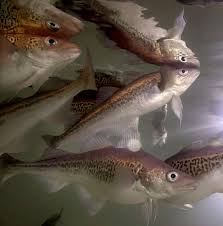
HONG KONG: Pink salmon in the Pacific Ocean face a double threat of acidification linked to greenhouse gas emissions since it slows their early growth in rivers and disrupts the chemistry of seawater, a study showed on Monday.
Impacts have in the past been more studied in the seas than in fresh water. But the Canadian study found that acidification of rivers could make young pink salmon, the most abundant type in the Pacific, smaller and more vulnerable to predators by dampening their ability to smell danger.
Damage done by acidification “in fresh water in pink salmon could occur in all other salmonids”, Colin Brauner, a co-author at the University of British Columbia, told Reuters. The findings were published in the journal Nature Climate Change.
Carbon dioxide, the main greenhouse gas caused by burning fossil fuels, reacts with water to produce a weak acid. That especially threatens creatures ranging from oysters to lobsters which find it harder to build protective shells.
An international study in 2013 said acidification of the oceans was happening at the fastest pace for 55 million years, because of human greenhouse gas emissions.
In the Canadian experiments, pink salmon grew on average to only about 32 mm (1.26 inches) after 10 weeks, when raised in waters with roughly double current carbon dioxide concentrations, shorter than the 34 mm in waters with current levels.
The young fish also weighed less and appeared less able to smell danger. Brauner said it was too early to say if the disruptions would last into adulthood and mean smaller commercial catches

Related Stories

Tesla driverless system to use updated radar technology

byCT Report
12/09/2016

WASHINGTON: Electric carmaker Tesla announced Sunday it was upgrading its Autopilot software to use more advanced radar technology. In a...

Apple to develop its own self-driving technology

byCT Report
10/09/2016

SAN FRANCISCO: Apple may not become an automaker, but it still wants to develop its own self-driving technology. The iPhone-maker's...

NASA spots slowest known magnetar

byCT Report
10/09/2016

WASHINGTON: Astronomers have found evidence of a magnetar - magnetised neutron star - that spins much slower than the slowest...

‘YouTubers’ outshining old-school television

byCT Report
09/08/2016

SAN FRANCISCO: A media revolution is taking place, and most people over 35 years of age aren’t tuned in. Millennial...

Next Post

Serbia foreign trade fall 13.9% to $12.76b in May

  • Terms and Conditions
  • Disclaimer

© 2011 Customs Today -World's first newspaper on customs. Customs Today.

No Result
View All Result
  • Transfers and Postings
  • Latest News
  • Karachi
  • Islamabad
  • Lahore
  • National
  • Chambers & Associations
  • Business
  • About Us

© 2011 Customs Today -World's first newspaper on customs. Customs Today.