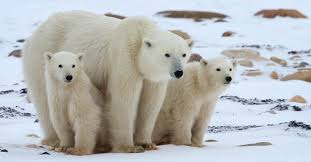


WASHINGTON: A report published by the U.S. Fish and Wildlife Service has revealed that polar bears are on the brink of extinction because of climate change with research showing that the animals die off at a high rate because their natural habitat is melting away.
The report, which is part of the agency’s plan for the carnivorous animal, says that about a third of polar bears could be in danger because of greenhouse gas emissions.
As global warming causes the disappearance of sea ice, the primary hunting ground of the polar bears, the animals are forced to retreat to land to search for food. Unfortunately, food sources on lands are limited and are not enough to sustain the populations of polar bears in the summer months.
Rebecca Noblin, from the Center for Biological Diversity, said that while there are other steps that could slow down the decline of polar bears, the only means of saving these animals in the Arctic is to reduce the emission of greenhouse gas.
Researchers who looked at how greenhouse gas emissions could impact polar bears in the coming years, however, have found that even if emissions are reduced, the populations of polar bears will still decrease.
“Addressing sea ice loss will require global policy solutions to reduce greenhouse gas emissions and likely be years in the making,” said U.S. Geological Survey research ecologist Mike Runge. “Because carbon emissions accumulate over time, there will be a lag, likely on the order of several decades, between mitigation of emissions and meaningful stabilization of sea ice loss.”
Knowing the status of the polar bear has prompted the FWS to launch “Critical Habitat”, which involves relocating polar bears that live in the most desperate areas. The critical areas include sea ice habitat, barrier island habitat and terrestrial denning habitat.

Karachi Port sets 138-year cargo handling record
KARACHI: Pakistan's maritime sector has achieved a major milestone as Karachi Port set a new record in its 138-year history...