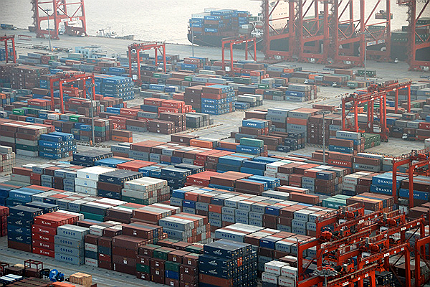
MUSCATINE: According to city leaders, all the right ingredients are available for the development of an intermodal container terminal and port district on the Mississippi River. “Muscatine is in a very unique position in regards to the development of a port,” Dave Gobin, Community Development Director, said. “Since there are no other ports of this kind north of St. Louis, there is a need for this type of terminal port and the infrastructure is in place here in Muscatine to develop this project.”
The City of Muscatine, along with matching funds from Kent Corporation, applied to the Iowa Department of Transportation for a Linking Iowa’s Freight Transportation Systems (LIFTS) grant for the Port of Muscatine Planning and Feasibility Study in October 2015. The basis of the study was to establish whether the vision of a multi-modal container terminal port facility located on the Mississippi River in Muscatine was feasible.
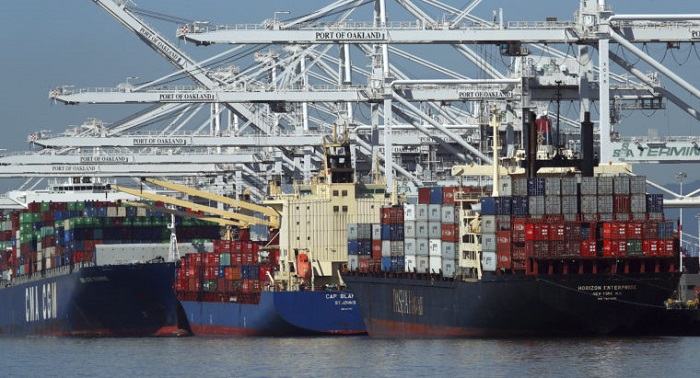

The facility would allow the sending, receiving, and trans-loading of intermodal container freight and smaller bulk items utilizing the river, highway, warehousing, or rail. The grant was awarded to the City in early 2016. “When you think about it, you have ports on the west coast that unload containers and ship them east,” Gobin said. “Then you have ports on the east coast that unload containers and ship them west. With the expansion of the Panama Canal, it makes sense to have a port in the middle of the country that allows sending containers south, using the river, and send shipments toward both coasts.” The study was prepared by HDR, Inc., out of Kansas City, Kansas.
Most commodities move down river with farm and food products accounting for 16.08 million short tons in 2016 according to data gathered at Lock and Dam 17 by the US Army Corps of Engineers. Other commodities moving through the Muscatine area include coal (1.70 short tons in 2016), petro and petroleum products (0.20), chemicals (4.37), crude materials (1.79), and manufactured goods (1.49). Total tonnage moving through Lock and Dam 17 has remained steady to slightly increasing each year with 25.77 million short tons recorded in 2016. The study also says that these commodities are most cost effectively shipped by water due to their lower value per ton, they are not time sensitive, and they can be handled with lower labor requirements and cost.