
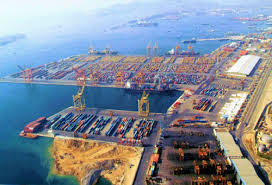
VANCOUVER: The Signs of the downturn in Canada’s commodity sectors are almost lost in an overall increase in cargo flowing through Port Metro Vancouver terminals in the first half of 2015.
Total cargo volumes rose 1.5 per cent to 70.3 million tonnes over the first six months of the year thanks to substantial increases in lumber, grain, potash and sulphur exports.
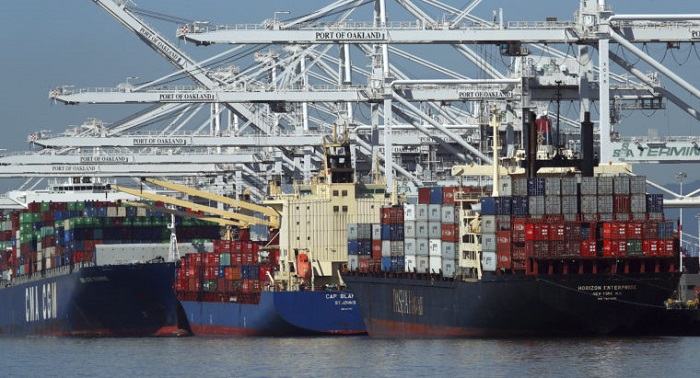

Shipments of mining commodities and oil, however — affected by the slowdown of China’s economy and a global energy glut — were down almost one million tonnes compared with 2014, with the impact of the rolling summer shutdowns of Teck Resources Ltd.’s mines yet to be felt in the coal sector.
“The environment is becoming very challenging for commodities,” said Patricia Mohr, vice-president of industry and commodities research for Scotiabank Economics. “And that’s partly a currency play, because of the broad-based strength of the U.S. dollar — prices have really been hurt by that — and of course always the concern about China.”
Mohr said industrial activity in China has decelerated in recent months and in July, the country’s exports and imports “fell fairly markedly” by eight per cent.
The visibility of that in Port Metro Vancouver’s cargo statistics was a 12-per-cent decline in shipments of mining ores and concentrates — including B.C. copper — to 703,487 tonnes, a 6.6-per-cent drop in shipments of thermal coal, which is burned to generate electricity, to 5.6 million tonnes and a 20-per-cent drop in crude oil shipments, which hit 1.2 million tonnes for the first half of the year.
The decline in thermal coal shipments was the biggest in straight volume, down 387,000 tonnes.
