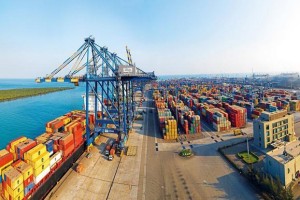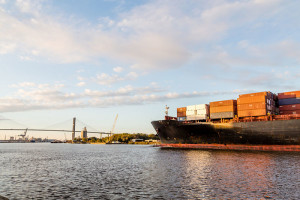
WASHINGTON: US seaports are joining forces, setting aside decades of regional competition over cargo as a wave of consolidation in the shipping industry threatens to cut some cities out of global trade routes. Shipping regulators are reviewing a proposal by the port authorities of Georgia and Virginia to discuss co-ordinating some operations, including investments in new equipment and negotiations with shipping lines. The ports of Seattle and Tacoma, Washington, merged most operations in 2015. The nation’s busiest ports, in Los Angeles and Long Beach, California, are sharing more data since severe congestion brought operations to a near halt along the west coast two years ago. The deals are a response to unprecedented consolidation in the shipping industry. The world’s top ocean carriers have formed three alliances that went into operation at the start of this month and will control 90 per cent of shipments on major global trade routes. They plan to save money by packing more cargo on larger ships that make fewer stops.
Many ports, fearful they would be left off shipping routes, are investing billions of dollars to dredge deeper harbours and install bigger cranes to handle the new class of mega-ships. Consolidation among US ports is the logical next step, experts say. “The shipping alliances have all the power,” said Geraldine Knatz, who was executive director of the Port of Los Angeles until January 2014 and is now a professor at the University of Southern California. “We’ve got to stop fighting each other, and try instead to build some leverage.” Many secondary ports are investing heavily to stay competitive. The Port of Miami recently spent more than $US1 billion ($1.3bn) on a deeper channel and other improvements, and expects volume to more than double by 2035. South Carolina’s Port of Charleston, the eighth-busiest US port, is spending $US2bn to break into the top five by 2020. The move toward partnerships underscores the stark choices facing ports on both coasts: beef up to handle big ships or get left behind. At stake are thousands of jobs and the livelihoods of importers, exporters and freight and logistics businesses that cluster around major ports.
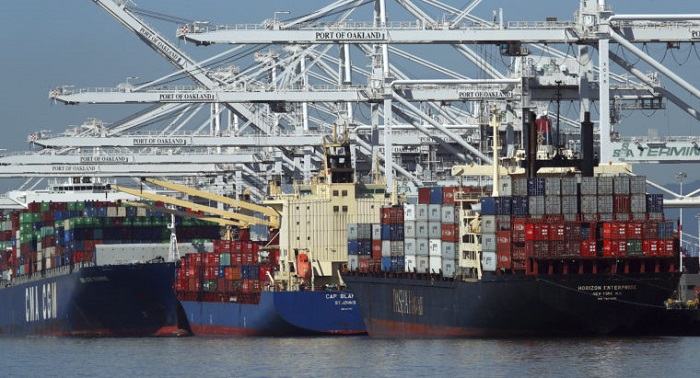

Port terminals in Portland, Oregon, Oakland, California and elsewhere were idle last year, but shipping lines called other ports on the west coast and overall container volume to the region’s ports rose in 2016. In Europe, ports in Belgium and Spain saw cargo volumes drop after ports in Britain, The Netherlands and Germany added capacity. Seattle and Tacoma, now operating as the Northwest Seaport Alliance, pool money and make infrastructure investments together. Last year, the ports handled 9 per cent more loaded containers, compared with a 4 per cent increase at southern California’s two ports and a 0.1 per cent drop at the Port of Vancouver, British Columbia, the closest large port to Seattle. The ports of Savannah, Georgia, and Norfolk, Virginia, the second and third-largest east coast container ports by volume, respectively, would continue to operate separately under their agreement, but would share some information such as what equipment they plan to buy and which types of cargo they would go after. This could allow the ports to complement each other by specialising in different kinds of cargo, rather than competing. Port officials in Georgia and Virginia declined to comment. The Federal Maritime Commission, which regulates ocean trade, has until mid-April to raise objections or request further details before the agreement goes into effect. “We’re seeing more port discussion and co-operation agreements in the US,” federal maritime commissioner William Doyle said. The East Coast Gateway agreement, as the Georgia-Virginia pact is known, is a “first step” toward broader co-ordination “that could lead to an alliance agreement if the synergies make sense,” he said. For retailers and manufacturers, port alliances could narrow shipping options, leaving fewer alternatives to move goods if a port closes for weather or becomes too congested. But the use of bigger ships could keep freight rates close to their recent lows.