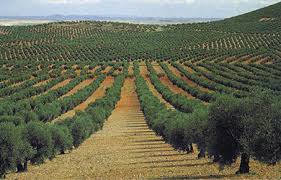
According to newspaper reports, the Pakistan Agricultural Research Council has planted olive trees on more than 3,000 acres of land during the last two years under Rs 380 million debt swap agreement with the Italian government. The ambitious project was launched in 2012, covering three countries in the region, Pakistan, Afghanistan and Nepal, where olive will be cultivated on an area of 50,000 acres in coming years. Under the project, at least 30 ton olive has already been produced in Pakistan and more areas will be brought under its cultivation in the near future.
Pakistan is a land of diverse geographical regions where tea, olive, and palm trees can be planted at a large scale to obtain precious agricultural yields. Olive is one of the agriculture species which does not need prime location but can flourish on marginal land. The only thing to do is to adopt modern technology to process and turn agriculture yields into value added commodities. For example, Pakistan is one of the leading countries in the world which produces watermelon and 10 largest country in the world in production of citrus fruit. Instead of encouraging simple fruit export, there is a need to establish industries in rural areas to turn fruit into jam, marmalade, juice, and other exportable items. If a simple watermelon is worth $1, the processed fruit can fetch $10 and that is what Japan is doing by exporting canned watermelon to Gulf States and elsewhere in the world and is earning millions of dollars foreign exchange annually.


The country’s Potohar region, parts of Khyber Pakhtunkhwa, Balochistan and the tribal areas are very suitable for cultivation of olive trees which is considered a cash crop. According to experts, Pakistan has the potential to produce olive oil worth billions of dollars while coastal areas in Sindh and Balochistan are suitable for oil palm cultivation. Pakistan’s annual import bill of edible oil is about $1 billion which can be drastically slashed by encouraging the cultivation of olive trees and oil palm in the country.