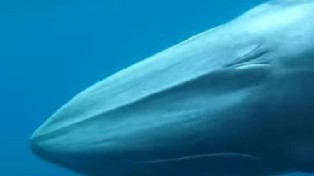
CANADA: Marine experts have recorded rare sightings of several Omura’s whales in the past couple of years, but what exactly makes these elusive marine animals distinctive?
Before the Omura’s whale or Balaenoptera omurai was formally studied, it was once referred to as the pygmy or dwarf form of the Bryde’s whale. Scientists only classified it as a new species when in 2003, DNA tests based on whale hunting expeditions and several stranded whale sightings revealed that the species was indeed genetically unique.


Based on studies, scientists said the Omura’s whale is approximately 33 to 38 feet in length, slightly smaller than the Bryde’s whale. These marine animals can be individually recognized because of the asymmetrical patches of dark and light stripes across their long and narrow bodies.
The structure of their bodies enables them to be really fast swimmers, experts say. Their size makes it difficult for marine experts to find them at sea, and they often occur in remote regions. In an expedition in 2011 and 2013, several Omura’s whales were sighted off the coast of Madagascar.
“From the little information on their habitat and range, Omura’s whales were not supposed to be in that part of the Indian Ocean,” said Salvatore Cerchio, lead researcher of the expedition.
What distinguished these marine animals from other whales was their unique pigmentation on their lower jaws, Cerchio said.
He added that Omura’s whales are also different from other marine mammals such as humpback whales because they preferred to socialize in loose groupings.