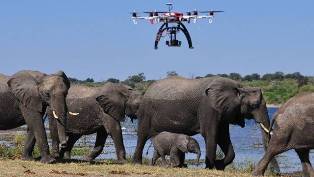


SYDNEY: Australian researchers have developed a drone to locate radio-tagged wildlife in inaccessible areas.
A custom-built miniature receiver and antenna provide real-time information on radio-tracked wildlife, which are mapped live on a laptop.
The unmanned aerial vehicle has successfully detected tiny radio transmitters weighing as little as one gram.
The system has been tested by tracking bettongs at the Mulligan’s Flat woodland sanctuary in Canberra.
“The small aerial robot will allow researchers to more rapidly and accurately find tagged wildlife, gain insights into movements of some of the world’s smallest and least known species and access areas that are otherwise inaccessible,” explained lead researcher Dr Debbie Saunders from Australian National University (ANU).
Along with University of Sydney, the researchers have done more than 150 test flights and have demonstrated how the drones can find and map the locations of animals with radio tags.
According to Oliver Cliff from the Australian Centre for Field Robotics (ACFR) at University of Sydney, the technology had generated international interest.
“Lots of people are trying to do this. It is not an easy process, but we believe we have come up with a solution,” he added.
Dr Saunders, a wildlife ecologist, came up with the idea eight years ago to track small dynamic migratory birds such as the endangered swift parrot.
The new system has been built and tested over the past two and a half years with Dr Robert Fitch and his team at the ACFR at the University of Sydney.
Early indications are that the drones could save a huge amount of time.
“If you have two operators working and they can put the drone up in two bursts of 20 minutes, they can do what would take half a day or more to do using ground methods,” the authors noted during a presentation at the Robotics: Science and Systems conference in Rome recently.

Karachi Port sets 138-year cargo handling record
KARACHI: Pakistan's maritime sector has achieved a major milestone as Karachi Port set a new record in its 138-year history...