Customs Today
  • Home
  • Islamabad
  • Karachi
  • Lahore
  • National
  • Transfers and Postings
  • Chambers & Associations
  • Business
No Result
View All Result
Customs Today
  • Home
  • Islamabad
  • Karachi
  • Lahore
  • National
  • Transfers and Postings
  • Chambers & Associations
  • Business
No Result
View All Result
Customs Today
No Result
View All Result
Home Science & Technology Science

Researchers discover 2.8m yrs old jawbone from our genus in Ethiopia

byCustoms Today Report
10/03/2015
in Science, Science & Technology
Share on FacebookShare on Twitter

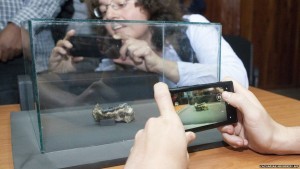
ADDIS ABADA: It looks like mankind’s earliest ancestors go back a lot further than first thought. After 13 years digging in the Rift Valley region of Ethiopia, team of researchers have found a 2.8-million-year-old jawbone from our genus.

Creatures of the genus Homo were thought to have evolved around two million years ago, producing various evolutionary offshoots before modern humans, Homo sapiens, came along. The new find kicks the birth of Homo back 400,000 years.


You might also like

Tesla driverless system to use updated radar technology

12/09/2016

Apple to develop its own self-driving technology

10/09/2016

“It’s an excellent case of a transitional fossil in a critical time period in human evolution,” said William Kimbel, director of Arizona State University’s Institute of Human Origins.

“One of the persistent questions that people have, and not just specialists, but everyone wonders about where did we come from? And paleoanthropologists such as myself are dedicated to the mission of filling in the story of our origins through the finding of fossil evidence in remote places like Africa. That’s where we go every year to do our research and we are rewarded this time with a very important specimen that answers one aspect of this pressing question.”

The find is small – a tiny piece of jawbone from the left side of the face with five teeth embedded in it – but it tells us a huge amount about our time on the planet. The molars are small, typical of Homo species, and the bone contains a mix of ancient and more recent evolutionary features.

“The importance of the specimen is that it adds a data point to a period of time in our ancestry in which we have very little information,” said Kimbel. “This is a little piece of the puzzle that opens the door to new types of questions and field investigations that we can go after to try to find additional evidence to fill in this poorly known time period.”


Related Stories

Tesla driverless system to use updated radar technology

byCT Report
12/09/2016

WASHINGTON: Electric carmaker Tesla announced Sunday it was upgrading its Autopilot software to use more advanced radar technology. In a...

Apple to develop its own self-driving technology

byCT Report
10/09/2016

SAN FRANCISCO: Apple may not become an automaker, but it still wants to develop its own self-driving technology. The iPhone-maker's...

NASA spots slowest known magnetar

byCT Report
10/09/2016

WASHINGTON: Astronomers have found evidence of a magnetar - magnetised neutron star - that spins much slower than the slowest...

‘YouTubers’ outshining old-school television

byCT Report
09/08/2016

SAN FRANCISCO: A media revolution is taking place, and most people over 35 years of age aren’t tuned in. Millennial...

Next Post

Indian rupee declines by 50 paisa to 62.66 against dollar in early move

  • Terms and Conditions
  • Disclaimer

© 2011 Customs Today -World's first newspaper on customs. Customs Today.

No Result
View All Result
  • Transfers and Postings
  • Latest News
  • Karachi
  • Islamabad
  • Lahore
  • National
  • Chambers & Associations
  • Business
  • About Us

© 2011 Customs Today -World's first newspaper on customs. Customs Today.