

LONDON: Humankind can welcome a new member to their evolutionary family, thanks in part to the work of SFU researcher Mana Dembo.
Dembo is a PhD student in the Department of Archaeology and was among the first select group of scientists who examined specimens of Homo naledi in South Africa.
Said Dembo, “What’s really significant about these fossils is [. . .] the sheer number — over 1500 specimens, representing at least 15 individuals. And we have fossils from infants, to adolescents, to adults, and even older adults.” She continued, “We’re lucky if we have a handful of [hominin] fossils from a site.”
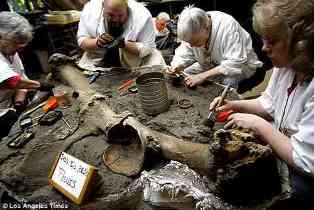
SFU has been involved with this project from the beginning. In October of 2013, Marina Elliott, who recently completed her PhD in the Department of Archaeology, was one of 6 scientists chosen to excavate the fossils from a cave within the Cradle of Humankind, a UNESCO World Heritage Site outside of Johannesburg.
Dembo was among over 40 scientists who responded to a call in January of 2014 to travel to Johannesburg to study the fossils at the University of Witwatersrand. She thought her PhD work, using fossils to reconstruct evolutionary relationships, would prove useful.
The international team of scientists, who hailed from the US, Canada, and the UK, among other countries, were divided into teams, each given a different section of the body. Dembo worked on the cranial material.
Said Dembo, “We described [the fossils], we analyzed them, we compared them to other known species of hominins, and eventually came to the conclusion that we had a new species which was distinct from all other species that we know of.”
One challenge facing scientists is the inability to date the fossils, “which makes it difficult to sort of slot them into our understanding of human evolution,” explained Dembo. She remarked that since carbon dating requires destruction of parts of the sample it had not been attempted yet.

Karachi Port sets 138-year cargo handling record
KARACHI: Pakistan's maritime sector has achieved a major milestone as Karachi Port set a new record in its 138-year history...