
Customs Today
  • Home
  • Islamabad
  • Karachi
  • Lahore
  • National
  • Transfers and Postings
  • Chambers & Associations
  • Business
No Result
View All Result
Customs Today
  • Home
  • Islamabad
  • Karachi
  • Lahore
  • National
  • Transfers and Postings
  • Chambers & Associations
  • Business
No Result
View All Result
Customs Today
No Result
View All Result
Home Science & Technology Science

Researchers expect to create super glue using spider science

byCustoms Today Report
22/10/2015
in Science, Science & Technology
Share on FacebookShare on Twitter

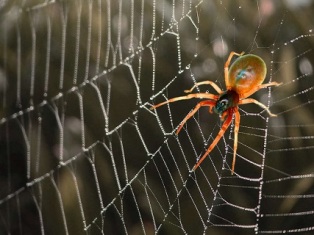
LONDON: Details related to how a spider adapts to its environment’s humidity and changes web viscosity may assist in developing stronger adhesives in the future. Spiders enhance web glue viscosity by relying on the humidity of their environment to boost the capture of prey, said researchers.  Researchers noticed that 7,500 out of 45,000 known species of spiders spin webs to catch prey, and that web silk is made up of an axial fiber coated with glue-like droplets.

According to the researchers, what makes the web so special is that its adhesion is based on humidity. In contrast, synthetic glue weakens when it comes in contact with moisture in high humidity. Scientists hope that what they have learned about spider webs will help them develop better forms of glue using the spider’s technology.


You might also like

Tesla driverless system to use updated radar technology

12/09/2016

Apple to develop its own self-driving technology

10/09/2016

Researchers from the University of Akron, Virginia Polytechnic Institute experimented with the connection between the web glue and humidity-dependent viscosity. Gaurav Amarpuri of Akron stated that the team measured the glue’s viscosity and its link to humidity, and used imaging to study the glue droplet spreading rate. The team did this for five spider species.

The team said that a liquid droplet’s spreading follows a “law” in which low adhesive droplets spread more quickly than ones with high adhesiveness. By using this “law”, they concluded that the glue is strongest at high humidity levels.

The team also examined the glue under a microscope, particularly its peeling factor, and discovered that its extensibility grows with humidity. Amarpuri said the glue adhesiveness showed “…changes of over five orders of magnitude with a shift from 30 percent to 90 percent relative humidity — the equivalent of a solution changing from the consistency of peanut butter to that of olive oil.”


Related Stories

Tesla driverless system to use updated radar technology

byCT Report
12/09/2016

WASHINGTON: Electric carmaker Tesla announced Sunday it was upgrading its Autopilot software to use more advanced radar technology. In a...

Apple to develop its own self-driving technology

byCT Report
10/09/2016

SAN FRANCISCO: Apple may not become an automaker, but it still wants to develop its own self-driving technology. The iPhone-maker's...

NASA spots slowest known magnetar

byCT Report
10/09/2016

WASHINGTON: Astronomers have found evidence of a magnetar - magnetised neutron star - that spins much slower than the slowest...

‘YouTubers’ outshining old-school television

byCT Report
09/08/2016

SAN FRANCISCO: A media revolution is taking place, and most people over 35 years of age aren’t tuned in. Millennial...

Next Post

Twitter opens publishing tools “Moments” for everyone

  • Terms and Conditions
  • Disclaimer

© 2011 Customs Today -World's first newspaper on customs. Customs Today.

No Result
View All Result
  • Transfers and Postings
  • Latest News
  • Karachi
  • Islamabad
  • Lahore
  • National
  • Chambers & Associations
  • Business
  • About Us

© 2011 Customs Today -World's first newspaper on customs. Customs Today.