You might also like


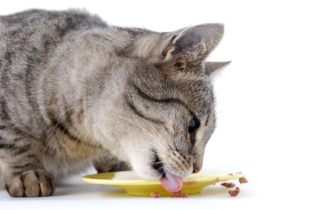
BRENT: Cats are finicky eaters, and new research shows the reason why this is the case. The animals respond to bitter tastes in a manner that is different from the way humans experience the sensation.
Bitter tastes may have evolved in humans as a means of avoiding toxins in plants. However, cats rarely eat plants, providing little use for that sense of taste.
A bitter taste receptor in humans known as Tas2r38 helps people taste bitter chemicals. However, for some “supertasters,” the taste can be overwhelming, leading to strong aversions to certain foods such as Brussels sprouts and cabbage. The new study shows that cats lie on the complete opposite end of the spectrum from such supertasters. Cats showed only 10 percent of the response of typical human tasters to a bitter chemical known as Ptc, and another bitter chemical, Prop, had no effect at all on the cats.
Another receptor, Tas2r43, was found to have differing effects in cats, depending on the substance used in testing. Felines were even more sensitive than humans to denatonium, the world’s most bitter substance which is used to sour the taste of antifreeze to prevent poisoning. However, cats were less sensitive than people to the bitterness of aloin, a chemical present in aloe plants. The animals were also not sensitive at all to saccharin, a sweetener which often leaves a bitter aftertaste in the mouths of humans.