

Customs Today
  • Home
  • Islamabad
  • Karachi
  • Lahore
  • National
  • Transfers and Postings
  • Chambers & Associations
  • Business
No Result
View All Result
Customs Today
  • Home
  • Islamabad
  • Karachi
  • Lahore
  • National
  • Transfers and Postings
  • Chambers & Associations
  • Business
No Result
View All Result
Customs Today
No Result
View All Result
Home Science & Technology Science

Researchers identify ‘most likely scenario’ for MH370 crash

byCustoms Today Report
12/06/2015
in Science, Science & Technology
Share on FacebookShare on Twitter

You might also like

Tesla driverless system to use updated radar technology

12/09/2016

Apple to develop its own self-driving technology

10/09/2016

Missing MH370 flight may have nosedived into the ocean: Researchers
The disappearance of Malaysia Airlines Flight 370 has been an enduring mystery since the plane lost contact with air traffic control on March 8, 2014, en route from Kuala Lumpur to Beijing.
Now a team of researchers at Texas A&M University at Qatar believe they have solved an important puzzle, simulating the plane’s most likely crash scenario.
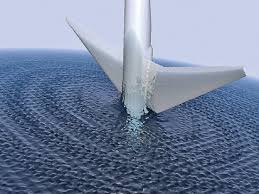
The team, led by Texas A&M mathematician Goong Chen, concluded that a nosedive crash into the ocean at a 90-degree angle would explain the lack of any sign of debris or oil around the suspected crash site.
“The true final moments of MH370 are likely to remain a mystery until someday when its black box is finally recovered and decoded,” Chen says.
“But forensics strongly supports that MH370 plunged into the ocean in a nosedive.”
In a paper for the American Mathematical Society, the team detailed their theory of what happened to the flight that vanished, carrying 239 people.
They say a crash of this type, with the plane entering the water like a diver, would create the least resistance and mean the aircraft would not break up into small pieces on the ocean surface.
Rather, large parts of the aircraft would have remained intact and sunk to the sea floor, leaving little evidence behind.
They ran computer simulations on a supercomputer to test five different crash scenarios and found that this was the most likely reason no debris was found even after extensive searches.

Related Stories

Tesla driverless system to use updated radar technology

byCT Report
12/09/2016

WASHINGTON: Electric carmaker Tesla announced Sunday it was upgrading its Autopilot software to use more advanced radar technology. In a...

Apple to develop its own self-driving technology

byCT Report
10/09/2016

SAN FRANCISCO: Apple may not become an automaker, but it still wants to develop its own self-driving technology. The iPhone-maker's...

NASA spots slowest known magnetar

byCT Report
10/09/2016

WASHINGTON: Astronomers have found evidence of a magnetar - magnetised neutron star - that spins much slower than the slowest...

‘YouTubers’ outshining old-school television

byCT Report
09/08/2016

SAN FRANCISCO: A media revolution is taking place, and most people over 35 years of age aren’t tuned in. Millennial...

Next Post

China’s NNPC surges 44% on debut

  • Terms and Conditions
  • Disclaimer

© 2011 Customs Today -World's first newspaper on customs. Customs Today.

No Result
View All Result
  • Transfers and Postings
  • Latest News
  • Karachi
  • Islamabad
  • Lahore
  • National
  • Chambers & Associations
  • Business
  • About Us

© 2011 Customs Today -World's first newspaper on customs. Customs Today.